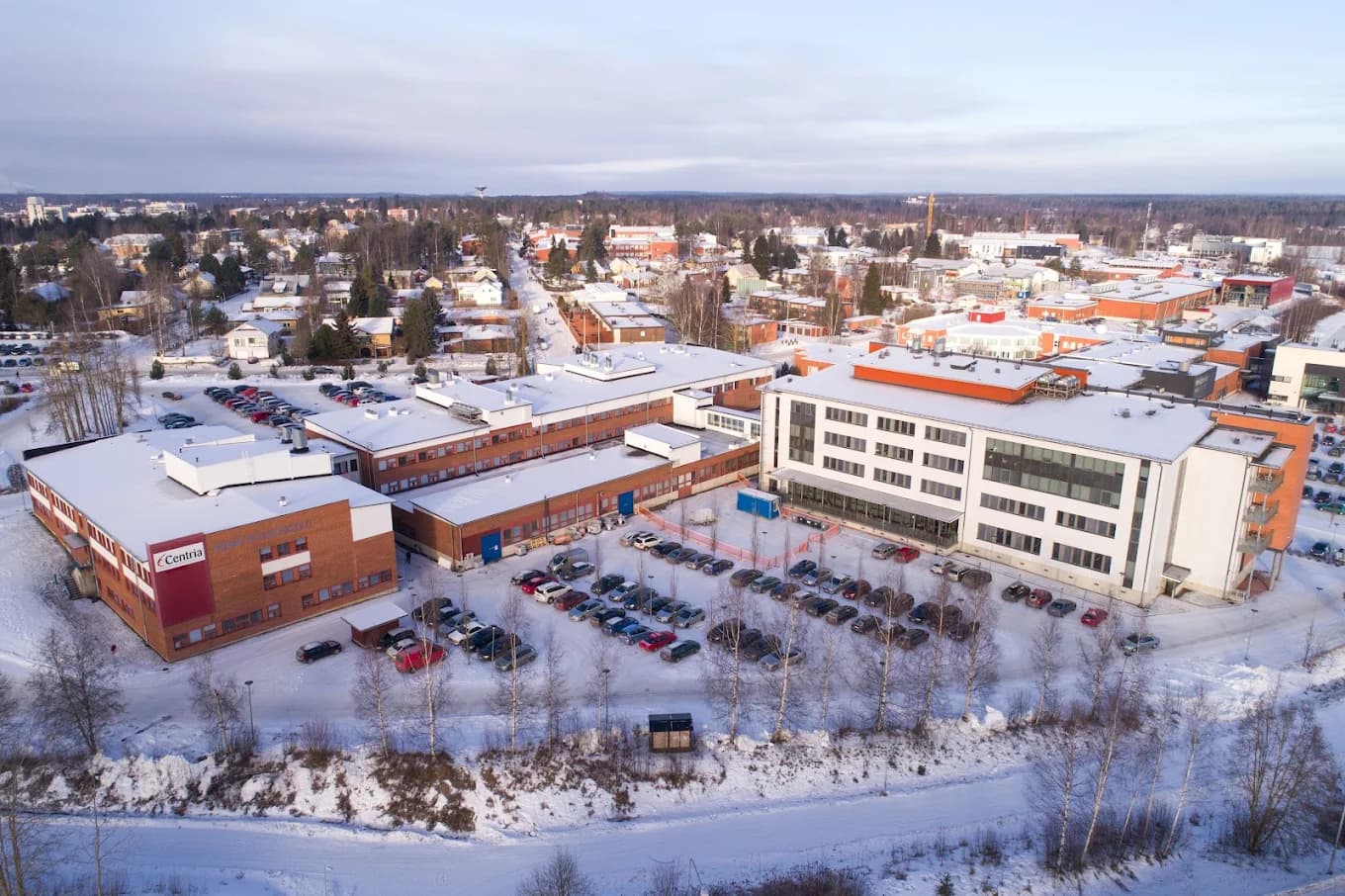
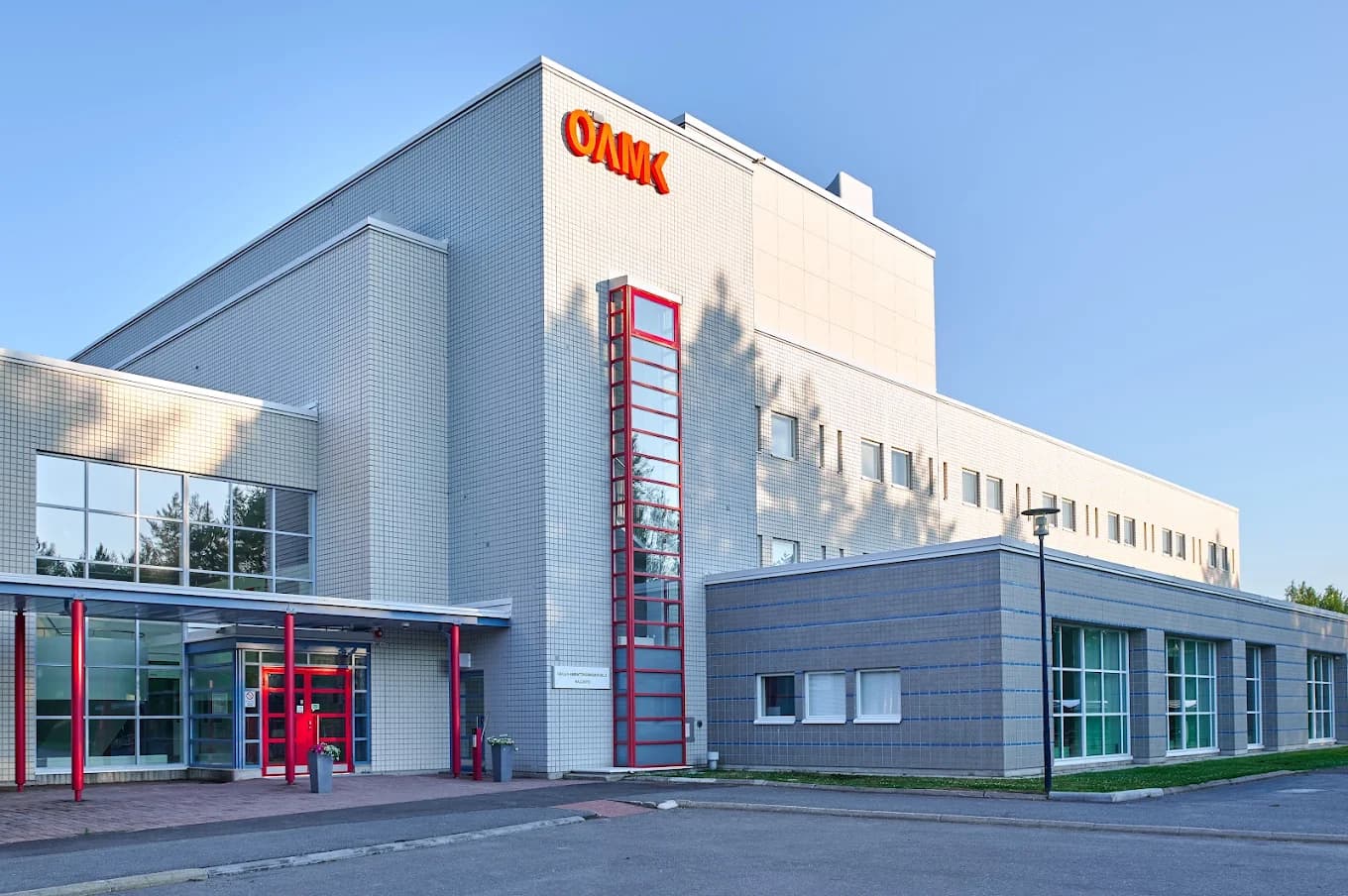
Oulu University of Applied Sciences — Oamk — is a separate institution from the University of Oulu, despite the shared city and similar name. If you are looking at a page mentioning Laturi or Pro Gradu, that is the university, not Oamk.
What distinguishes Oamk's published rules is the artificial intelligence guidance: eight numbered points, more specific than anything else in Finnish higher education we have read for these guides.
The credit breakdown
The 20-credit thesis course is itemised:
| Component | Credits |
|---|---|
| Thesis Kick-off and Ideation | 2 ECTS |
| Planning — thesis plan, implementation, theoretical framework | 4 ECTS |
| Implementation — data collection, analysis, results, the research or development task | 10 ECTS |
| Reporting — presentation of the thesis | 2 ECTS |
| Maturity Test — article, press release or expert blog | 2 ECTS |
Worth noticing: the maturity test carries 2 credits of its own. At many institutions it is an unweighted hurdle; here it is a tenth of the thesis.
The stages
- Discuss with thesis supervisors.
- Sign up for the thesis course in Peppi.
- Brainstorm a topic and get it approved.
- Prepare and approve the plan, and fill in the basic thesis information in Workseed with your supervisor.
- Carry out the thesis to the plan, filling in the Workseed form as you progress.
- Report using the template and reference guidelines.
- Assess your thesis and obtain the client's assessment.
- Save your thesis to Theseus.
Workseed runs through the whole process rather than appearing at the end, which matters for the AI reporting requirement below.
Artificial intelligence: the eight rules
Oamk's position is permissive about assistance and strict about substitution. Paraphrased, with the substance intact:
1. Understand what AI is and is not. A tool, not a source of information or an expert. It can be wrong, inaccurate or biased, and it can invent non-existent sources.
2. The responsibility is always yours — for content, decisions and quality, even where AI helped.
3. Support, not a substitute for thinking. Brainstorming, structuring, outlining and editing linguistic expression are fine. Producing entire passages is not — and Oamk names the cases: summarising sources, analysing sources or data, writing chapters, generating the reference list.
4. Evaluate AI output critically. Check accuracy, reliability and whether the sources actually exist, verifying from the original. If you use AI-produced content such as code, images or graphs, describe the application and your process openly.
5. Make your use visible. Describe in detail what you used AI for and how. Suitable places in the report include the introduction, methods, analysis or discussion. In addition, AI use across the whole thesis process is reported separately in Workseed on the designated form.
6. Follow good scientific practice. Presenting AI-produced content as your own work is academic misconduct. Oamk follows the guidelines of the Finnish National Board on Research Integrity.
7. Data protection and confidentiality. Never enter sensitive information or personal data into an AI application. Check with your commissioner whether you may use AI on their material at all, and use only tools approved by the institution or the commissioner.
8. Not in the maturity test. See below.
The maturity test
Required for the degree, on the subject of your thesis, demonstrating familiarity with the field and skills in Finnish or Swedish — the statutory basis Oamk cites is the Government Decree on Polytechnics 1229/2014, section 8.
The structure, content and style must be harmonious, and you are expected to show you can manage different text types in your profession.
AI is banned here. Oamk's reasoning is given plainly: the maturity test is where you demonstrate field familiarity and language proficiency under the decree, so the output must be produced entirely by the student.
Forms
An essay, article, blog, press release or poster presentation. The 20-credit course description names an article, press release or expert blog. Your supervisor provides the assignment and the options in your programme.
Language — decided by your schooling
This catches people out, so read it carefully:
- Educated in Finnish or Swedish → write the maturity test in that language. Oamk states explicitly that the language of your degree programme does not influence this. An English-taught degree does not give you an English maturity test.
- Educated abroad or in another language → write it in English.
Applying to change the language
For justified reasons you may apply for an exception. Email the Heads of Studies with:
- your degree programme and its language,
- your thesis supervisor's name,
- your language of education,
- your proposed language (English, Swedish or Finnish), and
- your justification.
The director of school decides, on a proposal from the head of studies.
One condition attaches: where an exception is granted, the maturity test shall always be completed under supervision. Asking for a different language means sitting it supervised.
Assessment
Pass or fail. The thesis supervisor assesses familiarity with the field.
Where the maturity test is written in Finnish or Swedish, the language is assessed as well — the criterion being that the language is polished and refined for the most part, in good factual style, with any linguistic errors not significantly impeding understanding. Written in another language, the language is not assessed.
Publication
The approved thesis is saved to Theseus, the shared UAS repository, and the maturity test is published alongside it. Theses from Finnish universities of applied sciences are all findable there.
Accessibility
Oamk publishes thesis accessibility guidelines and a Word template. As with other Finnish UAS institutions publishing to Theseus, accessibility is a requirement of publication rather than a nicety — build the document with real heading styles from the start.
What we could not confirm
Oamk does not publish a similarity percentage threshold. The pages used here describe academic misconduct in terms of practice and responsibility rather than a numeric limit.
An older Oulu UAS guide states the thesis is assessed on a numerical scale of 0–5 with the maturity test pass/fail. The pass/fail part is confirmed by the current maturity test page; the 0–5 thesis scale comes from the older guide rather than the current pages, so check your own course description before relying on it.