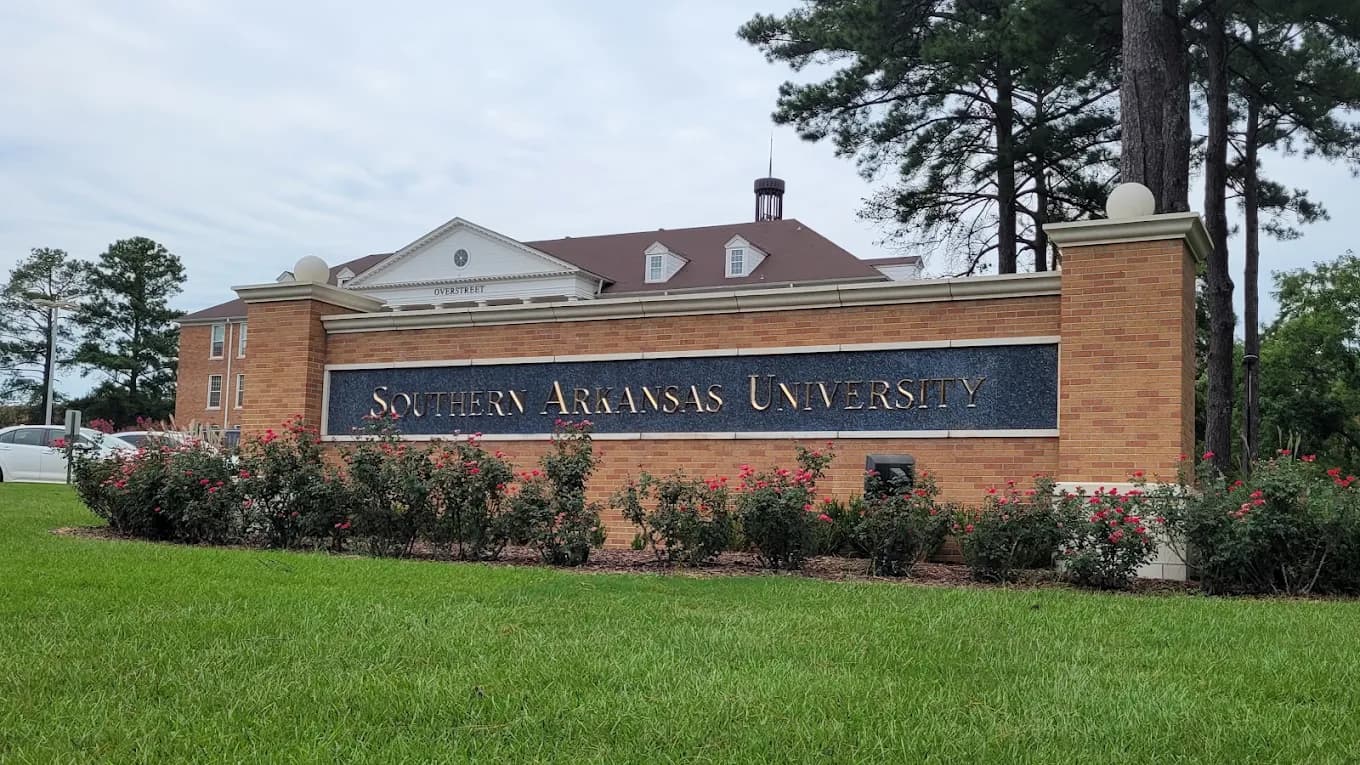
Before anything else, a naming note that will save you confusion. The institution is being renamed East Texas A&M University, and you will meet both names while you work. Graduate School pages still say Texas A&M University-Commerce, while Thesis and Dissertation Services now answers on [email protected]. Both are the same office. If an old address bounces, try the new domain rather than assuming the contact is wrong.
The timing rule that decides your graduation date
This is the single most consequential thing on this page.
Your proposal must be approved by the Graduate School at least one semester before the semester you plan to graduate in, and you cannot submit your final thesis in the same semester your proposal was approved.
Read those together and the arithmetic is unforgiving. A proposal approved in spring cannot lead to a spring graduation. It cannot even lead to a spring final submission. The earliest is the following semester.
Students routinely plan backward from a graduation date, assume the proposal is a formality to be cleared a few months out, and lose an entire semester to it. Plan forward from proposal approval instead.
The five steps
- Form your committee. A thesis committee is a minimum of three: your advisor plus two departmental members.
- Prepare and defend the proposal.
- Submit the proposal to TDS, with the proposal document, an iThenticate report, CITI training records, and IRB, IACUC or IBC approval where your research requires it.
- Prepare and schedule the final defence. The notification form is due no less than seven days before.
- Submit the final thesis, with the document and a second iThenticate report.
Everything goes to TDS by email. Hard copies are not accepted.
Two iThenticate reports, not one
The similarity check appears at both stages. That is worth knowing early, because a proposal written with loose paraphrasing sets a pattern that shows up again in the final document.
The university does not publish a threshold percentage anywhere public. That silence is not permission to ignore the number. Ask your advisor what they treat as acceptable in your field, and remember that a report is read, not just scored: a low overall percentage with one heavily matched passage is still a problem.
How the reviews actually work
| Document | Reviews |
|---|---|
| Proposal | Reviewed once |
| Final thesis or dissertation | Reviewed as many times as needed to meet formatting requirements |
That asymmetry matters. Because the proposal gets a single review, formatting it casually and expecting to fix things later does not work: an unapproved proposal delays the whole chain described above. The Graduate School states plainly that a proposal will not be approved unless it is formatted to its requirements.
The final document is the opposite. You can iterate as often as you need, but each round costs calendar time, and the deadline does not move. TDS returns results on a Reviewer's Checklist, sent to you and your advisor together.
Formatting
Two documents govern this: the Graduate School's thesis/dissertation template and the Thesis and Dissertation Formatting Guide. You use them together, alongside whichever style guide your discipline uses. TDS names APA, MLA and ACS as examples and leaves the choice to you and your advisor.
I am not going to reproduce margin and font figures here. The formatting guide is the controlling document and it is revised periodically, so a number copied into a third-party page is exactly the kind of thing that goes stale and gets a document returned. Download the current guide and use the template rather than rebuilding its layout by hand.
What is worth internalising is the principle TDS applies: conformity to the template, consistently, throughout.
Deadlines
The published Spring 2026 dates give you a sense of the spacing between milestones:
| Milestone | Spring 2026 |
|---|---|
| Final defence | 26 March 2026 |
| Final thesis submission | 3 April 2026 |
| Proposal submission | 24 April 2026 |
Note the shape of this. The proposal deadline falls after the final submission deadline, because they belong to different cohorts: the April proposal deadline is for students graduating in a later semester. Check the current dates for your own term rather than planning against these.
The doctoral track
Beyond the thesis rules, doctoral students face a separate set of constraints.
Committee. A minimum of three faculty from your major and minor areas, and at least one must be from outside your major department. This differs from the master's committee, which is drawn from within the department, so do not carry the wrong assumption across.
Qualifying examinations. Taken after roughly two full years of study. You apply to your major department at least three weeks before the examinations. A committee may recommend that a candidate repeat them, or be suspended, with the dean's approval.
Candidacy, and the eight-month floor.
The degree cannot be conferred sooner than eight months after admission to candidacy.
So passing your qualifying exams does not open a path to graduating the following term, however ready the dissertation is.
The ten-year limit. All requirements beyond the master's must be completed within ten calendar years of admission to the doctoral program, and coursework older than ten years cannot be applied to the degree. For anyone studying part-time alongside work, this is the constraint to map out at the start, because expired coursework has to be retaken.
The defence is held before your advisory committee in a session open to all graduate faculty members. You must be in good academic standing to be eligible.
Fees, and why your record may look wrong
Submission is not complete when the document is approved. The approval email sends you to ProQuest, and the published costs are:
| Charge | Amount |
|---|---|
| Graduation fee | $40 |
| Thesis or dissertation processing fee | $63 |
| ProQuest copyright registration | $75 |
| One bound copy for your advisor | $30 |
Your approval will not appear in DegreeWorks until fees are paid and the document is uploaded. If your record looks incomplete after a successful defence, this is almost always why.
What is not published centrally
- No word count or page count for any degree level
- No required citation style; your discipline and advisor decide
- No stated iThenticate similarity threshold
- No published university-wide policy on generative AI use in theses
- No published embargo durations on the thesis pages, so ask TDS directly if you need the full text held back
Pre-submission checklist
- Proposal approved a full semester before my intended graduation semester
- Committee formed and correct for my degree level, with an outside member if doctoral
- Proposal formatted to the template before its single review
- iThenticate report ready at proposal stage
- CITI training records submitted
- IRB, IACUC or IBC approval obtained where my research needs it
- Defence notification form filed at least seven days ahead
- Second iThenticate report ready for final submission
- Reviewer's Checklist items all cleared
- ProQuest upload done and all fees paid, so the approval reaches DegreeWorks
Where to get help
TDS is on [email protected] or (903) 886-5968, and owns every formatting and submission question. Your advisor and committee own the academic content and anything the formatting guide leaves open.
If you are comparing requirements across Texas institutions, our UT Arlington guide covers a notably different model, where the university sets far fewer central rules and leaves more to the committee.
And if the writing itself is what is slowing you down rather than the process, our thesis writing support works through it chapter by chapter with you.