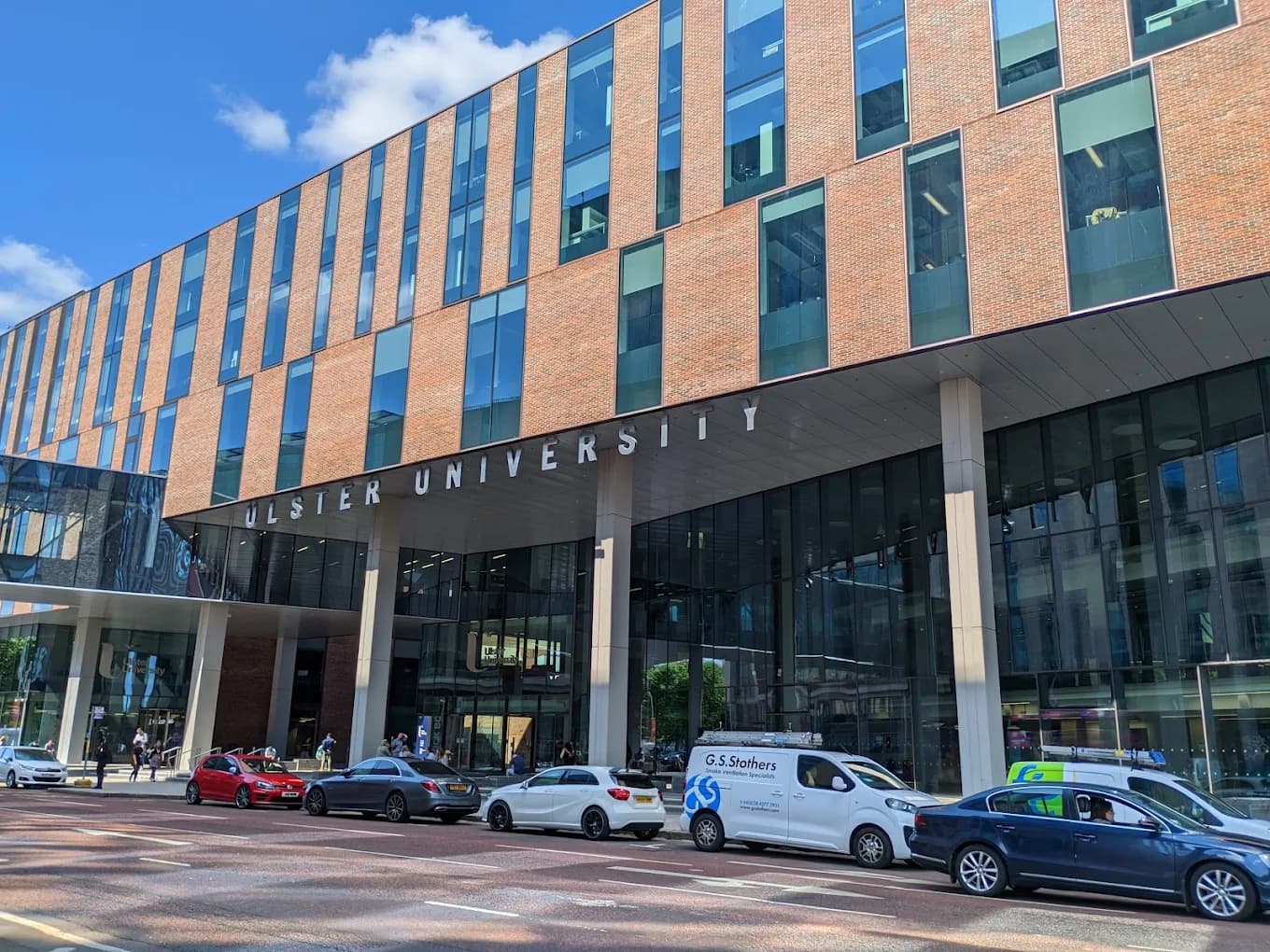
Ulster runs its research degrees through the Doctoral College, and its published rules are among the more complete in this set: word limits, presentation, notice periods and the examination timetable are all stated openly.
The notice period
Start here, because it is the rule most likely to catch you out.
A candidate shall give the Doctoral College three months' notice in writing of submission of the thesis, to allow time for examination arrangements.
Three months is longer than most universities ask. It is not a soft expectation either; the notice is what triggers the appointment of examiners. If you discover it six weeks before you intended to submit, your timetable moves.
There is a second, separate deadline:
PhD Researchers are required to electronically submit a PDF copy of the thesis for examination at least one month before the viva date.
These are different things. The three months is notice of intention; the one month is the thesis itself reaching the examiners.
The word limit, and what it excludes
A thesis submitted for the degree of PhD shall not exceed 100,000 words, excluding appendices, footnotes, bibliographies and diagrams.
The exclusions are as important as the number. A hundred thousand words of argument, with references and appendices outside the count, is a genuinely generous allowance, and it means you do not need to sacrifice a thorough bibliography to stay inside it.
Two qualifications:
These limits shall be strictly enforced and only in exceptional circumstances will permission to exceed them be granted.
Faculties may recommend lower lengths as standard within an academic discipline.
So 100,000 is a university ceiling, not a disciplinary norm. Ask your faculty what it expects, because a science faculty recommending 60,000 is the figure that actually applies to you.
Three ways to structure the thesis
Ulster accepts three distinct forms, and choosing between them is a decision to take early.
Traditional
Chapters covering introduction, literature review, methods, results, discussion and so on.
Papers format
The material is focused around manuscripts in paper format, and crucially:
The papers need not necessarily already be published or even submitted.
That is more flexible than many universities, which require papers to be at least under review. But the format carries conditions:
- Where a manuscript has multiple authors, the precise contribution you made to both the execution of the work and the writing must be explicitly stated
- You should not include papers where you are not the lead author or one of the lead authors
- The decision to use this format should be supervisor-led
And a warning the guidelines make directly:
The thesis must be presented in a form that makes assessment readily possible by the examiners, which needs careful consideration where paper formats are used, given the potential for a disjointed and repetitious presentation.
That is the real difficulty with a papers thesis. Four papers written for four journals will repeat their methods sections and will not explain how they connect. The linking material is what turns them into a thesis, and it is usually underestimated.
PhD with Practice
Where a practical component is part of the submission:
The written documentation for PhDs that include a practical component will be within the range of 20,000 to 60,000 words.
Individual faculties may set specific limits within that range depending on the nature of the practical component. Note the shape of this: the written element is substantially shorter than a conventional thesis, because the practice carries part of the argument.
Presentation
| Element | Requirement |
|---|---|
| Font | Sans serif advised, for example Helvetica or Arial |
| Size | 12 point |
| Line spacing | 1.5 or double; single permitted for indented quotations and footnotes |
| Page size | A4, portrait |
| Binding-edge margin | Not less than 40 millimetres |
| Page numbers | Preferably top outer corner |
| Abstract | No more than 300 words |
| File | PDF, a single file where possible |
The sans serif recommendation is unusual. Most universities either say nothing or default to a serif face like Times New Roman; Ulster specifically advises Helvetica or Arial. It is advice rather than a rule, but it is the sort of detail an examiner notices.
The 40 millimetre binding margin is roughly 1.6 inches, wider than the one inch many templates default to.
The abstract must do three things in 300 words: give a synopsis, state the nature and scope of the research, and state the contribution to knowledge. Write it to that structure.
Ulster has moved away from requiring printed theses. Submission is electronic, in industry standard software, as a single PDF where possible. Printing and binding guidance still exists for anyone wanting a personal copy.
The examination timetable
| Stage | Timing |
|---|---|
| Notice of submission | 3 months in writing, before submitting |
| PDF to examiners | At least 1 month before the viva |
| Viva held | No less than 4 weeks after the Board of Examiners receives the thesis |
| Viva normally held by | Within 3 months of receipt |
The four week floor is worth understanding. Examiners need time to read, and the regulations protect that time. You cannot compress the end of the process by being available early.
After the viva, once the Board of Examiners is satisfied the requirements are met and any amendments have been approved by the Internal Examiner where appropriate, you submit the final thesis on PhD Manager.
What to confirm rather than assume
- Your faculty's recommended length, which may be well below 100,000 words
- The specific written word limit for your PhD with Practice, within the 20,000 to 60,000 range
- The number of papers expected in a papers-format thesis, which is not fixed centrally
- Citation style, a disciplinary matter
- Correction deadlines attached to each examination outcome
- Similarity thresholds and any policy on generative AI use
- Embargo durations for open access deposit
Pre-submission checklist
- Three months' written notice given to the Doctoral College
- Within 100,000 words, or my faculty's lower recommended length
- Clear that appendices, footnotes, bibliography and diagrams sit outside the count
- Abstract within 300 words, covering synopsis, scope and contribution
- A4 portrait, 12 point sans serif, 1.5 or double spaced
- Binding-edge margin at least 40mm
- Page numbers in the top outer corner
- Single PDF prepared
- If papers format: lead authorship on every included paper
- If papers format: precise contribution stated for every multi-authored manuscript
- If papers format: linking material written so the thesis reads as one argument
- PDF with the examiners at least a month before the viva
Where to get help
The Doctoral College owns notice, submission, examination arrangements and the format rules. Your faculty sets the recommended length for your discipline, which is the figure that matters more than the university ceiling. Your supervisors own the choice of thesis format, which the guidelines say should be supervisor-led.
If the writing itself is the bottleneck, our thesis writing support works through it chapter by chapter, and our PhD thesis help covers doctoral work specifically.