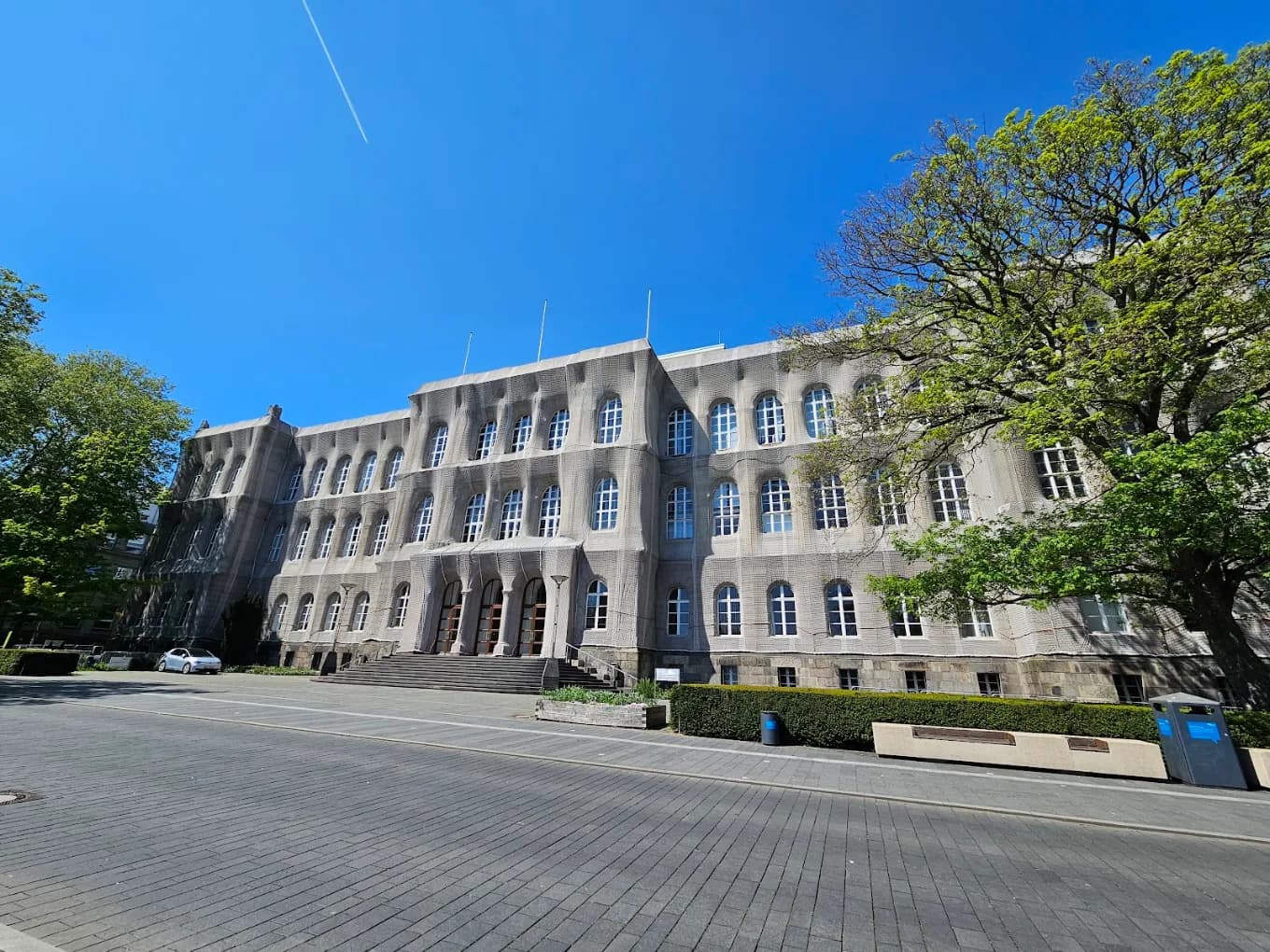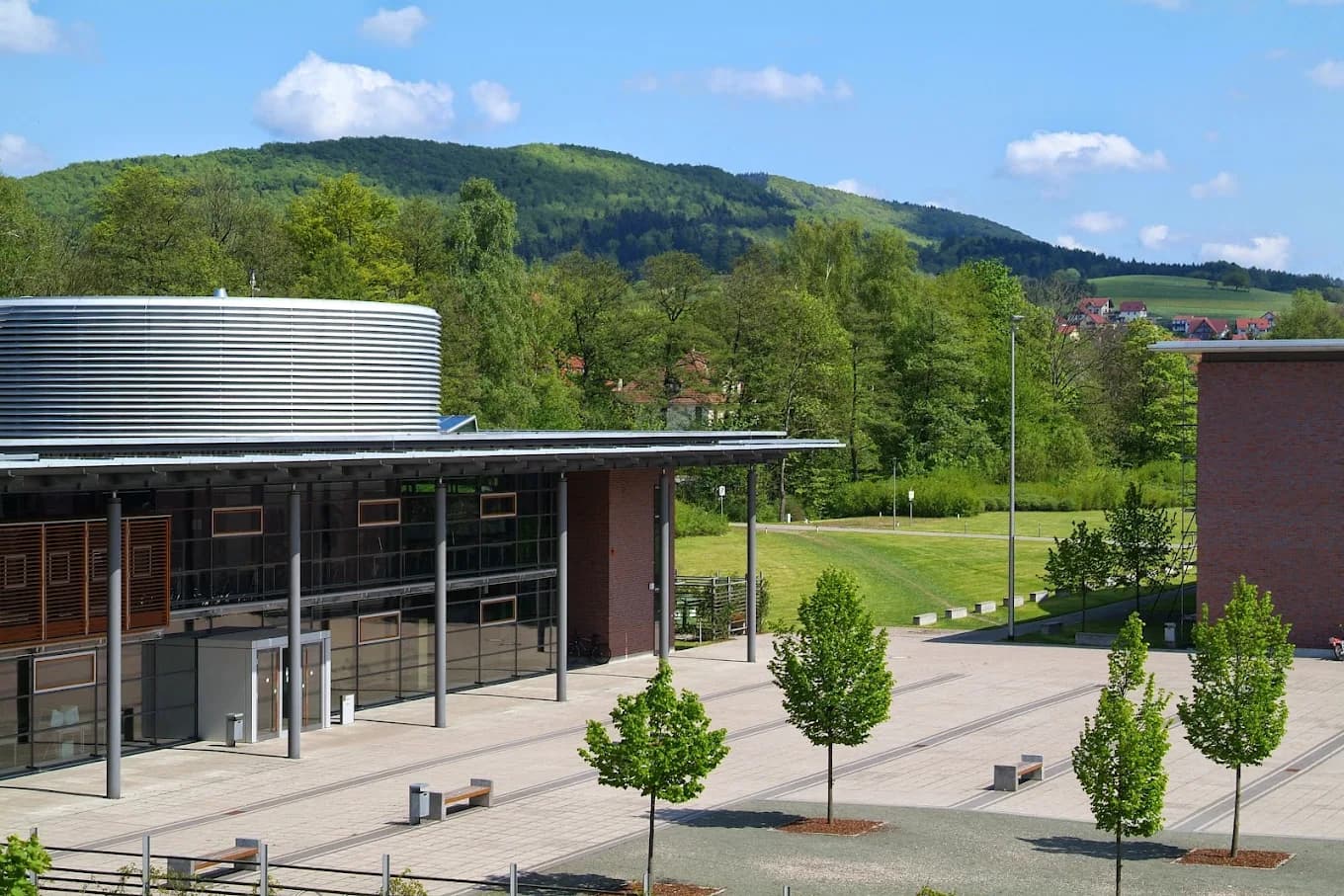
Hochschule Schmalkalden is a public university of applied sciences in Thuringia. Its position on doctorates is more interesting than most institutions of its type, because it is changing.
Two answers, depending on when you ask
Today: cooperative doctorates
Schmalkalden does not currently hold independent doctoral authority. As at other German universities of applied sciences, the Promotionsrecht rests with universities.
What it runs instead is the cooperative doctorate, and the Faculty of Business Law supervises these procedures, allowing graduates of its Master's in Business Law to reach a doctorate.
Cooperative doctorates enable the promotion of graduates at a university with the participation of a professor from Hochschule Schmalkalden.
The partner universities are named:
- Universität Halle
- Universität Münster
- Universität Kassel
- Universität Bamberg
Named partners are genuinely more useful than the vague "cooperation with partner universities" that most institutions in this position offer. You can go and read Halle's, Münster's, Kassel's and Bamberg's doctoral regulations now, before committing to anything, and see which one's requirements and publication rules suit your circumstances.
Remember what governs you in this arrangement: the awarding university's Promotionsordnung, not Schmalkalden's rules. Thesis length, examination format, grading and the duty to publish all come from the partner institution.
Soon, possibly: its own doctoral centre
The university is currently developing its own Promotionszentrum. In the current review process the university was assessed fundamentally positively. For the establishment of the doctoral centre, two further teaching staff must still be provided.
Several German states, Thuringia among them, have opened a route for universities of applied sciences to establish doctoral centres with the right to confer doctorates in defined fields. Schmalkalden is partway through it: positively assessed, with a staffing condition outstanding.
Two practical readings of that.
If you are starting soon, plan on the cooperative route. A centre that still needs appointments made is not something to build a timeline around.
If you are planning several years out, ask directly where the process has reached. A doctorate awarded by Schmalkalden itself would be simpler administratively than a cooperative one, and the position may well have moved by the time you apply.
This guide records the position as published at the time of writing. Confirm it rather than relying on this page, because it is exactly the sort of fact that changes.
Entry requirements
| Requirement | Detail |
|---|---|
| Qualification | A master's degree or university Diplom; more rarely an FH Diplom or a bachelor's with very good results |
| Subject competence | Fachliche Eignung in a relevant field |
| Supervision | A professor willing to supervise the dissertation |
| Formal criteria | Those of the relevant faculty's or doctoral centre's regulations |
The bachelor's route exists but is described as rare and conditional on very good performance. Do not plan around it unless someone has told you specifically that it applies to you.
The first step is the supervision commitment
The first step into a doctorate begins with a Betreuungszusage, a supervision commitment.
This is the whole game in the German system, and it is worth being blunt about what it means. You are not applying to a programme that will assess you against criteria. You are persuading a specific professor to take personal responsibility for your work for several years.
What follows from that:
- Approach individuals, not institutions. A generic application to a faculty goes nowhere.
- Read their actual work. A proposal that connects to what a professor is currently researching gets read; one that could have been sent to anyone does not.
- Be concrete. A clear question, a defensible method and a realistic scope are more persuasive than enthusiasm.
- Expect it to take time. Supervision commitments are not given quickly, and being turned down by one professor says little about the next.
Funding
The routes Schmalkalden lists:
- Stipends from foundations and research organisations, particularly the DFG, the German Research Foundation
- Research assistant positions funded through third-party projects
- External corporate sponsorship
- Self-financing
- Institutional support programmes
For an applied-sciences institution, the third-party project and corporate routes are worth taking seriously. Applied research at a Hochschule is frequently funded by industry partners, and a doctorate embedded in a funded project solves the money problem and the data-access problem at once.
The master's thesis
For most students at Schmalkalden, the substantial research writing is the Masterarbeit. The standard it must meet:
The candidate must demonstrate the ability to work on a problem in their field of study independently, on a scientific basis, using appropriate methodology.
Three things are being assessed there, and the third is the one students most often neglect. "Appropriate methodology" means the method has to fit the question, and you have to be able to say why. A well-executed method that cannot answer what you asked is a weaker thesis than a simpler one that can.
If a doctorate is your goal, the Masterarbeit is also the piece of work a prospective supervisor will read. Choose a topic near where you want to go.
What to confirm
With your faculty, for the master's thesis:
- Word count or page limits, which vary by programme
- Formatting: margins, font, line spacing
- Citation style
- Submission deadlines and registration
- Whether a colloquium or defence forms part of the assessment
- Any similarity check, and any policy on generative AI
Schmalkalden publishes examination regulations per programme rather than centrally, so the Prüfungsordnung for your degree is the document to find.
With the partner university, for a cooperative doctorate:
- Its full Promotionsordnung, in the current version
- Whether it accepts cooperative arrangements with a Hochschule, and on what terms
- Thesis length, language and format
- Examination format and grading
- The publication duty, its deadline and copy counts
Checklist
For the master's thesis:
- Found the Prüfungsordnung for my specific programme
- Length and formatting confirmed from it
- Method chosen to fit the question, and justifiable as such
- Topic chosen with any doctoral ambition in mind
For a doctorate:
- Checked the current status of the Promotionszentrum
- Identified which of Halle, Münster, Kassel or Bamberg fits my field
- Read that university's doctoral regulations
- Identified a specific Schmalkalden professor whose research connects to mine
- Proposal written for that person, not as a general application
- Funding route identified
Where to get help
The research and transfer office publishes the general doctoral guidance and knows where the Promotionszentrum process stands. The Faculty of Business Law supervises cooperative procedures. Your faculty owns the examination regulations for your taught degree, and the partner university owns everything about the doctorate itself.
If the writing is the bottleneck, our thesis writing support covers both stages, with master thesis help for a Masterarbeit and PhD thesis help for doctoral work.