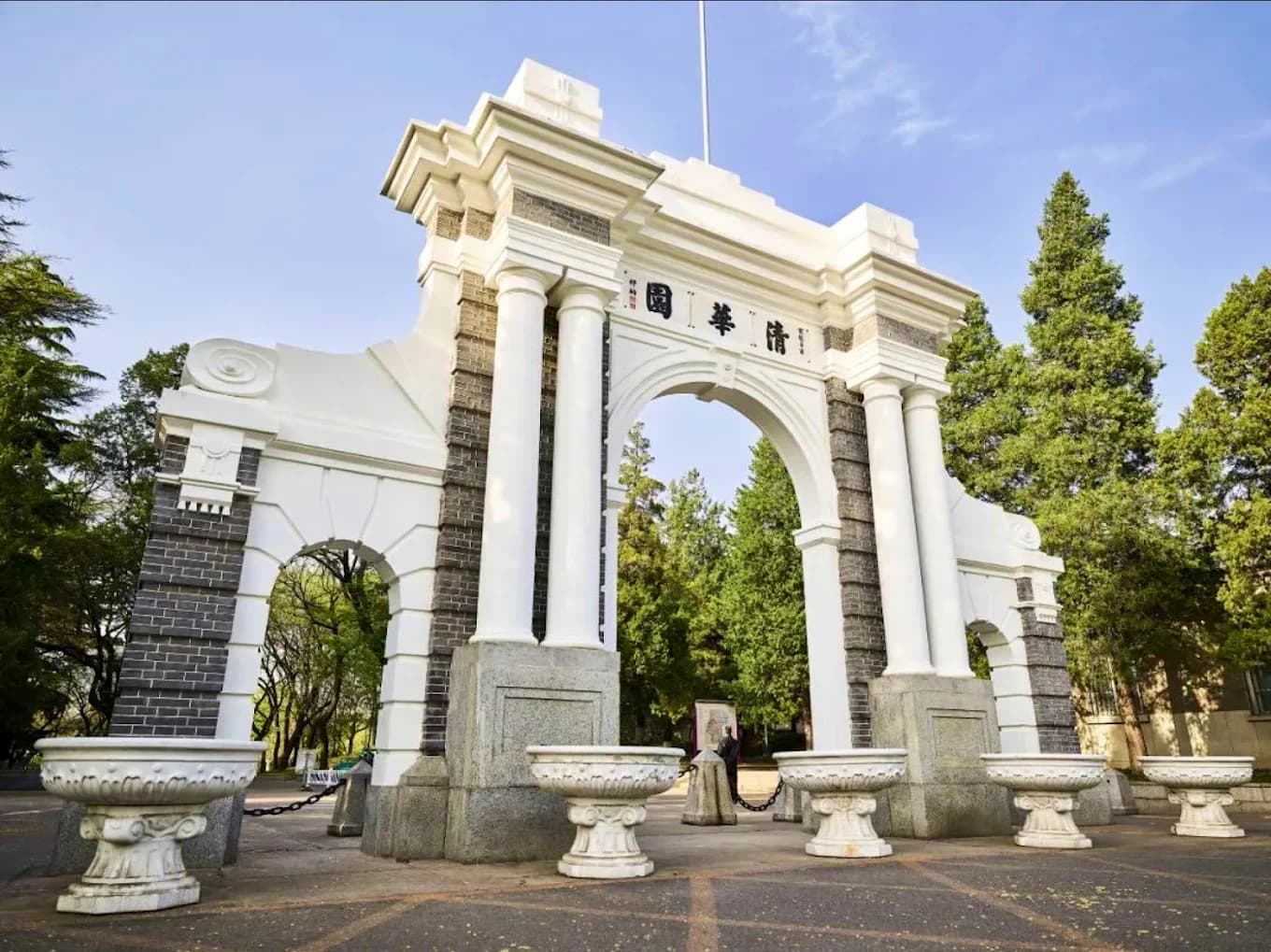
Tsinghua University runs its graduate degree process through the 研究生院 (yánjiūshēng yuàn, Graduate School) and a set of 学位评定分委员会 (xuéwèi píngdìng fēnwěiyuánhuì, degree evaluation sub-committees) sitting under the university degree committee. That layering matters more here than the formatting does. The Graduate School publishes the format rules centrally, but the decisions that determine whether you graduate in a given round are taken by your sub-committee and your department.
The law changed on 1 January 2025
China's 学位法 (Academic Degrees Law) came into force on 1 January 2025 and repealed the 1980 学位条例 (Regulations on Academic Degrees). Most of the guidance circulating online, including on university sites, predates it.
Three things in the new law affect you directly:
- Article 25 requires your thesis to be sent to expert reviewers before a defence is organised. The defence only happens if that review meets the awarding institution's standard.
- Article 37 sets out when a degree is refused or revoked: ghostwriting, plagiarism or fabrication (代写、剽窃、伪造) in the thesis; identity fraud or illegitimate admission; other serious unlawful conduct during study.
- Article 40 gives you a right to 学术复核 (xuéshù fùhé, academic re-review) if you dispute an academic evaluation from review, defence or outcome assessment. The institution must reconvene experts and decide within 30 days, and that decision is final.
Tsinghua's own 学位授予工作实施细则 is a 2019 revision and still cites the repealed 学位条例. Where the two differ, the law governs. Do not read the older document as evidence that the law's protections do not apply to you.
Format: what the 2025 writing guide actually requires
The 《清华大学研究生学位论文写作指南》 is reissued most years. The March 2025 edition is the one to work from, and it is prescriptive.
| Element | Requirement |
|---|---|
| Title | No more than 25 Chinese characters, 一号黑体, centred |
| Chinese abstract | 800-1,000 characters, must fit on one page, no figures or tables |
| Keywords | No more than 5, separated by semicolons |
| Body text | 小四号 (12pt), 宋体 for Chinese and Times New Roman for English, fixed 20pt line spacing, first line indented 2 characters |
| Margins (from the abstract onward) | 3.0 cm on all four sides, gutter 0, header and footer 2.2 cm from edge |
| Paper | A4, 70-80 gsm white, double-sided from the Chinese abstract onward |
| Page numbering | Uppercase Roman numerals from the abstract to the symbols list; Arabic numerals restarting at 1 from Chapter 1 |
Cover stock is specified by degree type: white art paper for academic doctoral theses, pearl silver-grey for professional doctoral, yellow for academic master's and blue for professional master's.
The order of parts is fixed, and each part starts a new page: Chinese cover, English cover, the list of the supervision group, open reviewers and defence committee, the usage authorisation statement, abstract, Abstract, contents, figure and table lists, symbols, main text, references, appendices, acknowledgements, declaration, CV and academic output, supervisor's comments, and the defence committee resolution.
Two details worth noticing in that list. Since 2020 Tsinghua binds the defence committee list and the defence resolution into the thesis itself. The committee appointment letter reproduced in the Computer Science timeline asks members to sign an informed consent form acknowledging this. And where a thesis went to fully anonymous review, the open reviewer table is filled in with "无(全隐名评阅)", none, fully anonymous review.
If you are an international student
The writing guide states that international graduate students may write the thesis in Chinese or English, unless their department says otherwise. It is not a free pass:
- The Chinese cover page is mandatory regardless of the thesis language.
- You must supply a Chinese abstract of 800 to 1,000 characters, limited to one page. Tsinghua's implementing rules say the same thing in Article 33.
- Figure captions, axis labels, legends and table headers are expected in Chinese in Chinese-language theses; check with your department how this applies to an English one.
- The templates and the writing guide are published in Chinese only.
Budget real time for the Chinese abstract. It is not a translation of your English abstract done the night before; it is a standalone 800-1,000 character summary that a Chinese-reading examiner will actually use.
Review before you can apply to defend
Under Tsinghua's implementing rules, a master's or doctoral thesis must pass 同行评议 (tóngháng píngyì, peer review) before you can apply for a defence at all. You apply, your supervisor recommends, and the committee membership is approved by the sub-committee before anything is scheduled.
Tsinghua uses 隐名评阅 (yǐnmíng píngyuè, anonymised review) alongside named open review. The Computer Science department's December 2024 timeline is a useful concrete picture of how that works in one department: doctoral candidates submit an electronic thesis with every mention of the supervisor's name replaced by "导师隐名", including both cover pages, the acknowledgements and the publication list, and that anonymised version goes out for blind review in parallel with an open review by two named reviewers, at least one internal.
The same department runs a 写作规范审查 (format compliance review) by its sub-committee before the thesis is sent out. Failing it stops you from continuing in that graduation round, and the supervisor is recorded as having failed to supervise formatting properly. Three such records suspend that supervisor's admissions for the following year. Other departments run their own version of this.
These are departmental rules, not university-wide ones. Get your own department's current timeline from its teaching office. The dates move every round.
The 答辩 and the vote
| Master's | Doctoral | |
|---|---|---|
| Committee size | 5-7 (3-5 if a concentrated defence is impractical) | 5-7 |
| Seniority | Over half with senior professional title; chair must hold one | Over half qualified to supervise doctoral students in the field; chair 正高级 |
| External members | Not specified centrally | 2-3 external, no fewer than 3 internal |
| Must include | One sub-committee member; for professional master's, one senior practitioner from the relevant industry | At least one thesis reviewer, at least one sub-committee member; 1-2 experts from the other discipline for interdisciplinary work |
| Supervisor | May be one member if 4+; never on a 3-person committee; never chair | At most one of your supervisors may be a member; never chair |
| Advance copy | — | Members who were not reviewers get the thesis at least one week ahead |
| Vote | Secret ballot, two-thirds of all members | Secret ballot, two-thirds of all members |
Doctoral defences are held publicly as a matter of principle, and defences normally take place on a Tsinghua campus. A secretary keeps a verbatim record. Relatives of the candidate or the supervisor cannot serve as members or secretary. Defences are also subject to random spot-checking (抽查), and where yours is selected, your supervisor may not sit on the committee at all.
If the defence fails, more than half of the full committee must agree before you may revise and reapply once, within one year for a master's and two years for a doctorate.
Deposit, embargo and what happens afterwards
Your thesis goes to the university library and, for doctoral theses, to the National Library of China under Article 30 of the 学位法. From there it reaches CNKI (中国知网), Wanfang and other national databases.
Tsinghua's 保密管理办法 is the only place that publishes an embargo route, and it is narrow. A thesis involving technical or commercial secrets may have publication deferred by at most two years. Classified theses are a different regime entirely: classification must be settled before your proposal defence, the title and abstract must not themselves be classified, marking is 机密 for up to 20 years or 秘密 for up to 10, and a classified thesis cannot go through anonymous review.
After you graduate, the 博士硕士学位论文抽检办法 applies. Each year the national degrees office samples around 10% of doctoral theses and provincial committees around 5% of master's theses, drawn from the previous academic year's awards, and sends each one to three peer reviewers. Two or more "unqualified" verdicts marks it a 存在问题学位论文 (problem thesis); one triggers a re-review by two further experts, where a single unqualified verdict is enough. Results feed into degree programme accreditation and into supervisors' admission quotas. Tsinghua's own rules list a thesis later found not to meet the award standard as a ground for revoking the degree.
Academic integrity
Tsinghua's 学术不端行为调查认定工作办法, issued in November 2025, covers plagiarism, data fabrication and falsification, ghostwriting, buying or selling research data, duplicate publication and improper authorship. The Academic Committee oversees investigations, departments run a preliminary inquiry within 15 working days, and an investigation team has at least five members. The overall procedure is capped at six months.
The writing guide requires a signed 声明 (shēngmíng, declaration) after the acknowledgements, confirming that you have not infringed anyone else's copyright. Read your thesis against it before you sign rather than treating it as a form.
If you are using AI tools, ask your supervisor and your sub-committee what must be disclosed. The rules in force here were not drafted with these tools in mind, and a gap in the text is not permission.
Pre-submission checklist
- Current edition of the writing guide downloaded, not last year's
- Title within 25 Chinese characters
- Chinese abstract of 800-1,000 characters, on one page, even if the thesis is in English
- Chinese cover page used, whatever language I wrote in
- Margins 3.0 cm, body text 小四, fixed 20pt line spacing, correct cover stock
- Roman numerals for front matter, Arabic restarting at Chapter 1
- Supervisor's name redacted everywhere if my department sends the thesis to anonymous review
- Department's format compliance review passed before the thesis goes out
- Misconduct check run through my info account, result seen by my supervisor
- Defence application in by my department's deadline, with the committee approved by the sub-committee
- Declaration signed, usage authorisation statement included
- Embargo or classification settled at the right stage, not at submission
Where to get help
Your supervisor and your department's teaching office (教学办) come first for deadlines, committee composition and anything that varies by 学位评定分委员会. The Graduate School owns the writing guide and the final misconduct check. The library handles the thesis service system and deposit.
If it is the writing itself rather than the regulations that has stalled, our thesis writing support works chapter by chapter, and the pricing page sets out what that costs.