
Common Thesis Writing Mistakes Students Should Avoid
Written by The Mythesisbuddy Team · Published August 5, 2026 · 6 min read
Many thesis problems are not caused by a lack of intelligence or subject knowledge. They arise from unclear scope, weak planning, inconsistent research practices, and rushed revision. Recognizing these mistakes early can save weeks of unnecessary work and help you produce a more coherent thesis.
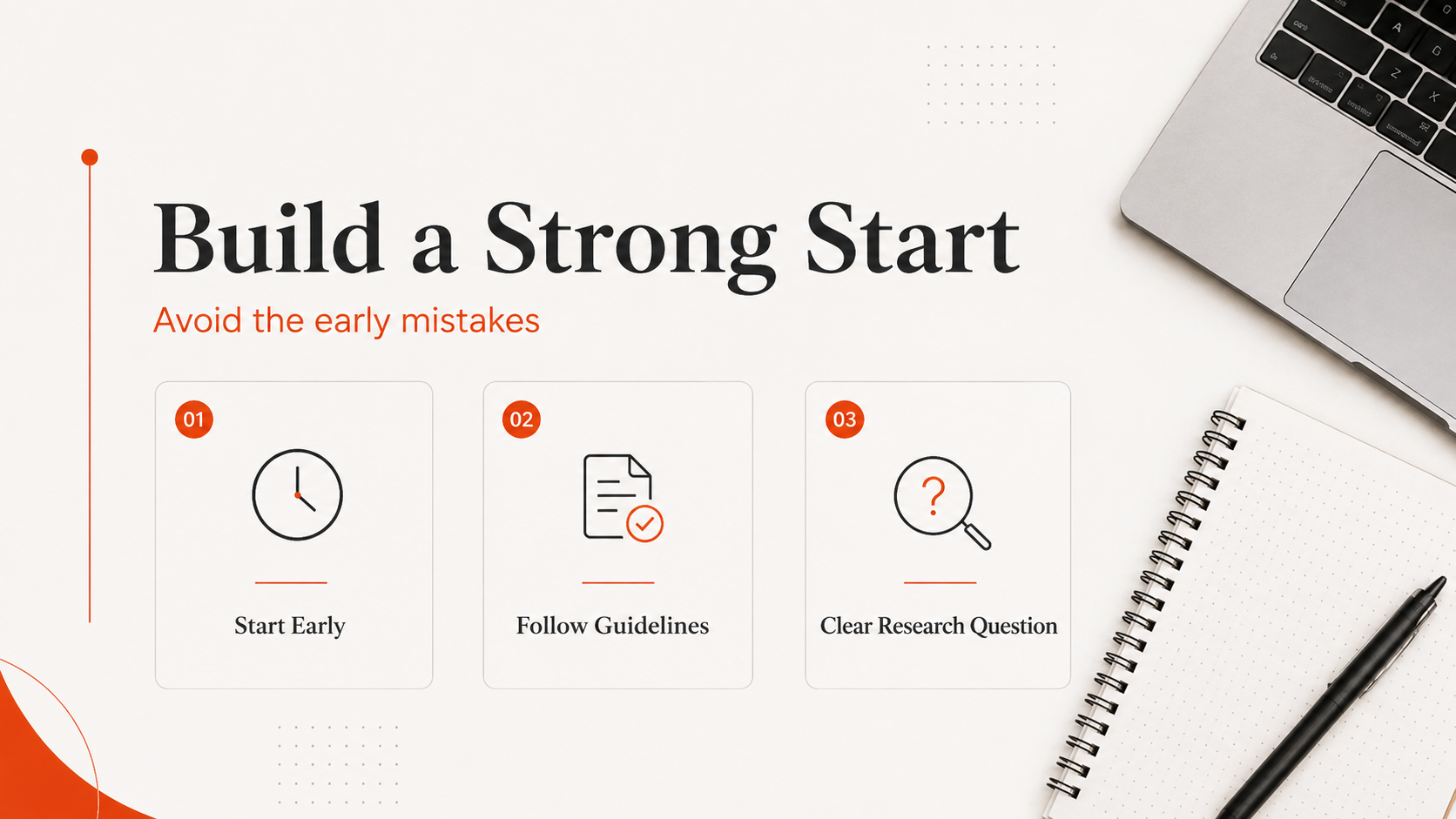
1. Starting Without Reading the Requirements
Students sometimes begin writing with a generic thesis template and discover later that their university requires different chapters, formatting, or submission materials.
How to avoid it:
- Download the latest official handbook.
- Check for faculty- or program-specific rules.
- Create a formatting and submission checklist.
- Confirm unclear instructions with your supervisor or graduate office.
2. Choosing a Topic That Is Too Broad
A broad topic creates an unmanageable literature review and a shallow analysis. It can also make it difficult to choose an appropriate methodology.
How to avoid it:
Define the population, location, time period, variables, or case being studied. Test the proposed scope against the available time, data, access, and word limit.
3. Using a Vague Research Question
If the research question is unclear, the thesis will struggle to maintain direction. Chapters may become interesting individually but fail to form one coherent study.
How to avoid it:
Write the research question in one sentence. Then check whether the literature review, methodology, results, and discussion all help answer it. If they do not, revise either the question or the content.
4. Treating the Literature Review as a List of Summaries
A weak literature review describes one source after another without comparing ideas or building an argument.
How to avoid it:
Organize the review by themes, debates, methods, theories, or chronological developments. Compare sources and explain:
- Where researchers agree
- Where they disagree
- Which methods dominate
- What limitations remain
- How the literature creates a need for your study
5. Selecting a Methodology That Does Not Fit the Question
A sophisticated method is not automatically the right method. The methodology must help answer the research question and be feasible within the project.
How to avoid it:
Explain why the chosen design, sample, data source, instrument, and analysis method are appropriate. Address limitations and ethical requirements honestly.
6. Collecting Data Without a Clear Analysis Plan
Students may gather large amounts of information before deciding how it will be analyzed. This can produce missing variables, unusable responses, or unnecessary data.
How to avoid it:
Before data collection, map each research question to:
- The evidence needed
- The collection method
- The unit of analysis
- The planned analytical technique
- The expected form of the result
Pilot surveys, interview questions, or data-extraction forms when appropriate.
7. Confusing Results With Discussion
The results section reports what was found. The discussion explains what those findings mean. Mixing them without a clear structure can lead to repetition or unsupported interpretation.
How to avoid it:
Follow your discipline's convention. Whether the sections are separate or combined, clearly distinguish evidence from interpretation and connect both to the research question.
8. Making Claims the Evidence Cannot Support
A small sample, limited case study, or correlational result may not justify a broad causal conclusion.
How to avoid it:
Use language that matches the strength of the evidence. State limitations, avoid overgeneralization, and distinguish association from causation.
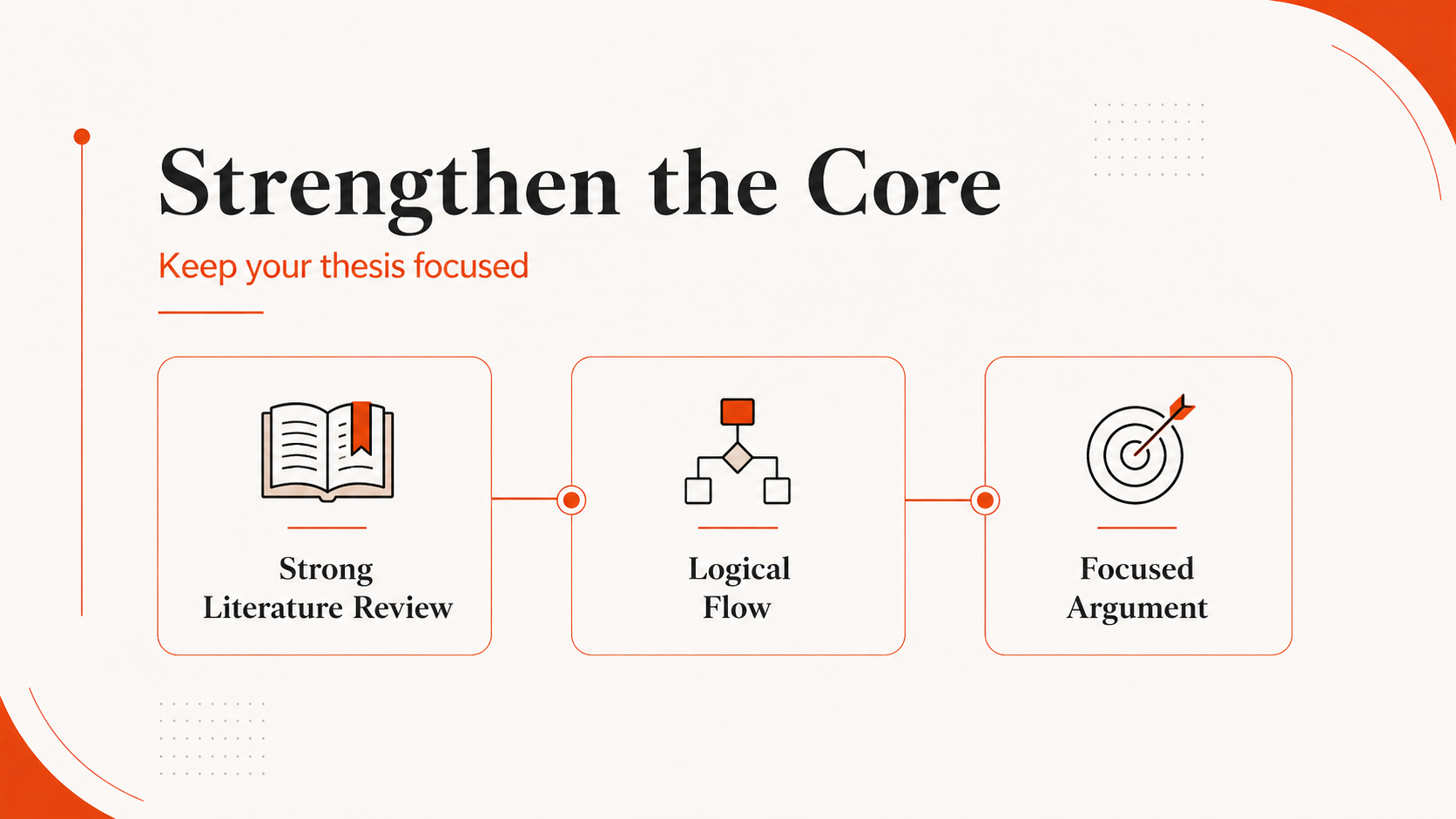
9. Losing Logical Flow Between Chapters
A thesis may contain good material but still feel fragmented if chapters do not connect.
How to avoid it:
Begin each chapter by stating its purpose and end it by summarizing what it established. Use transitions to show why the next chapter follows. Revisit the research question throughout the thesis.
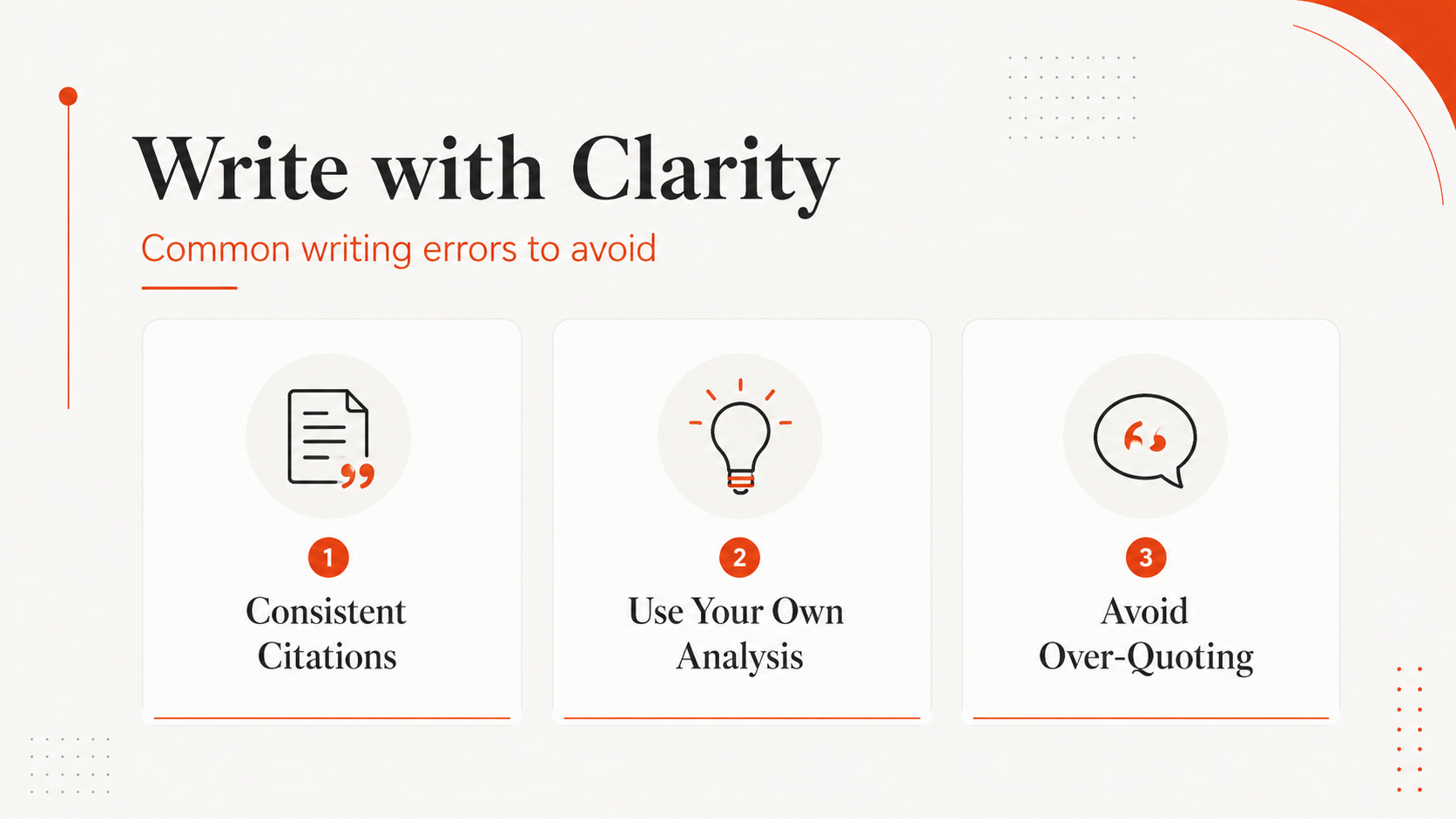
10. Overusing Direct Quotations
Too many quotations can make the thesis sound like a compilation of other people's writing rather than your analysis.
How to avoid it:
Quote only when the original wording is important. Otherwise, paraphrase accurately, cite the source, compare it with other evidence, and explain its relevance.
11. Managing References at the End
Postponing citation work often produces missing sources, inconsistent formatting, and accidental attribution errors.
How to avoid it:
Record full source details during research. Use a reference manager where appropriate, then manually check the final output against the required style.
12. Editing While Trying to Produce the First Draft
Constantly polishing early sentences can slow progress and create the illusion of work without advancing the argument.
How to avoid it:
Separate drafting from revision. Use placeholders for minor missing details, complete the section's logic, and return later for careful editing.
13. Ignoring Tables, Figures, and Appendices Until the End
Late formatting can reveal missing labels, inconsistent numbering, unreadable graphics, or references to items that no longer exist.
How to avoid it:
Number and title visual material as it is created. Refer to each table or figure in the text and explain the relevant finding rather than asking the visual to speak for itself.
14. Depending on One Copy of the Thesis
Device failure, accidental deletion, or corrupted files can erase months of work.
How to avoid it:
Use a versioned backup system with copies in more than one secure location. Back up research notes, datasets, consent records, analysis files, and reference libraries—not only the main document.
15. Leaving Feedback and Proofreading Too Late
Feedback is useful only when there is time to respond. Final-day proofreading cannot repair a weak argument or unsuitable methodology.
How to avoid it:
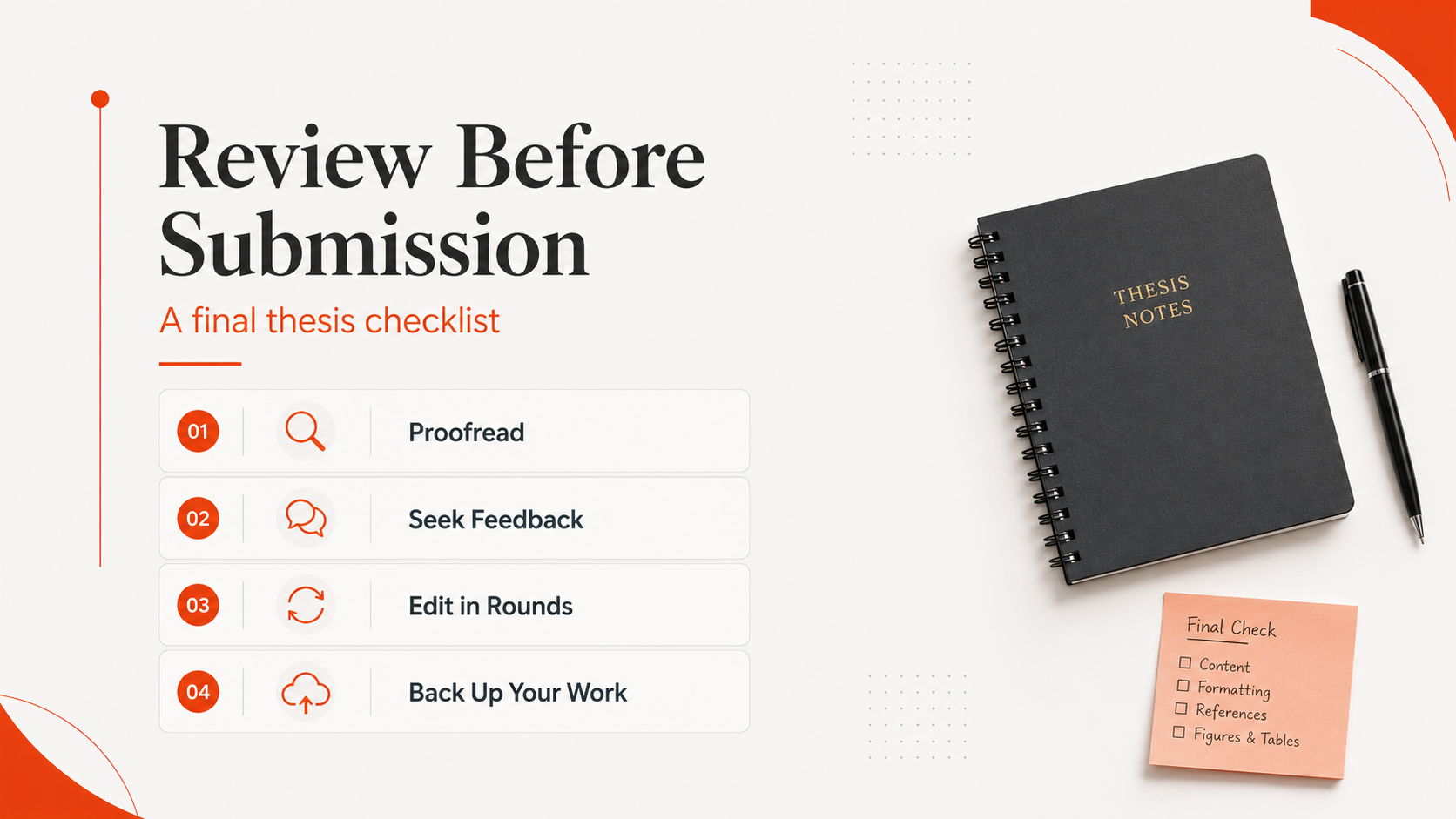
Build supervisor review and revision time into the schedule. Complete substantive editing before proofreading surface errors.
A Better Revision Order
Use this sequence to avoid polishing material that may later be removed:
- Research question and scope
- Overall argument
- Chapter structure
- Methodological alignment
- Evidence and analysis
- Paragraph flow
- Citation and formatting
- Grammar and proofreading
Quick Prevention Checklist
- Confirm the current university requirements.
- Narrow the topic and research question.
- Create a chapter outline and project schedule.
- Develop an analysis plan before collecting data.
- Record every source during research.
- Compare and synthesize literature instead of listing it.
- Match conclusions to the strength of the evidence.
- Back up files in multiple secure locations.
- Request feedback before the final deadline.
- Revise content before proofreading language.
Final Thoughts
Avoiding common thesis mistakes is largely a matter of building a reliable process. Clarify the question, plan before collecting evidence, write consistently, manage sources carefully, and leave time for meaningful revision. These habits will make the project more manageable and the final thesis more credible.
Key Takeaways
- A vague research question undermines the whole thesis — write it in one sentence before drafting further.
- A literature review should compare and synthesize sources, not just summarize them one by one.
- The methodology must fit the research question, not just look sophisticated.
- Match your conclusions to the actual strength of your evidence — avoid overgeneralizing.
- Keep chapters connected with clear transitions back to the research question.
- Manage references and back up your files throughout the project, not at the end.
- Build in time for supervisor feedback before final proofreading.
Frequently Asked Questions
Written by The Mythesisbuddy Team
Our academics write and review every article — see Our Team for how we protect their privacy and yours.
Related articles

How to Plan, Research, and Write a Thesis Step by Step
A thesis is easier to manage as a sequence of decisions rather than one overwhelming task. A fifteen-step framework for moving from an initial idea to a submission-ready document.
The Mythesisbuddy Team · August 25, 2026 · 7 min read
10 Professional Tips to Write a Thesis Like an Expert
Strong theses aren't produced through inspiration alone — they're built through planning, consistent work, and repeated revision. Ten practical habits for approaching your thesis with more structure and confidence.
The Mythesisbuddy Team · August 15, 2026 · 7 min read
Working on your thesis?
Explore our thesis writing service to learn about the process, pricing, and available support — or message us directly with your requirements.