

How to Plan, Research, and Write a Thesis Step by Step
Written by The Mythesisbuddy Team · Published August 25, 2026 · 7 min read
A thesis becomes less intimidating when it is treated as a sequence of manageable decisions rather than one enormous writing task. The exact process differs by discipline and university, but the following framework can help you move from an initial idea to a submission-ready document.
Step 1: Understand the Requirements
Collect the official documents that govern your thesis:
- Thesis or dissertation handbook
- Program requirements
- Formatting manual
- Ethics procedures
- Submission deadlines
- Assessment rubric
- Required forms and declarations
Note which requirements apply to your degree, faculty, and research method. Create a checklist and calendar before planning the content.
Step 2: Define the Research Problem
A research problem describes the issue, gap, contradiction, or unanswered question your study will address.
Write a short problem statement explaining:
- What is happening?
- What is already known?
- What remains unclear?
- Why does the issue matter?
- What will your study examine?
This becomes the foundation for the research question and objectives.
Step 3: Select and Narrow the Topic
Evaluate potential topics against four tests:
| Test | Question |
|---|---|
| Relevance | Does the topic matter to the discipline or practice? |
| Evidence | Are credible sources or data available? |
| Feasibility | Can it be completed with the available time and resources? |
| Focus | Is the scope narrow enough for meaningful analysis? |
Discuss the shortlist with your supervisor before investing heavily in one direction.
Step 4: Develop the Research Question and Objectives
Write one central research question and, where appropriate, supporting questions. Then translate the question into specific objectives.
Each objective should describe an action the study will complete, such as:
- Examine
- Compare
- Evaluate
- Explore
- Measure
- Interpret
Avoid objectives that cannot be addressed by the selected data and method.
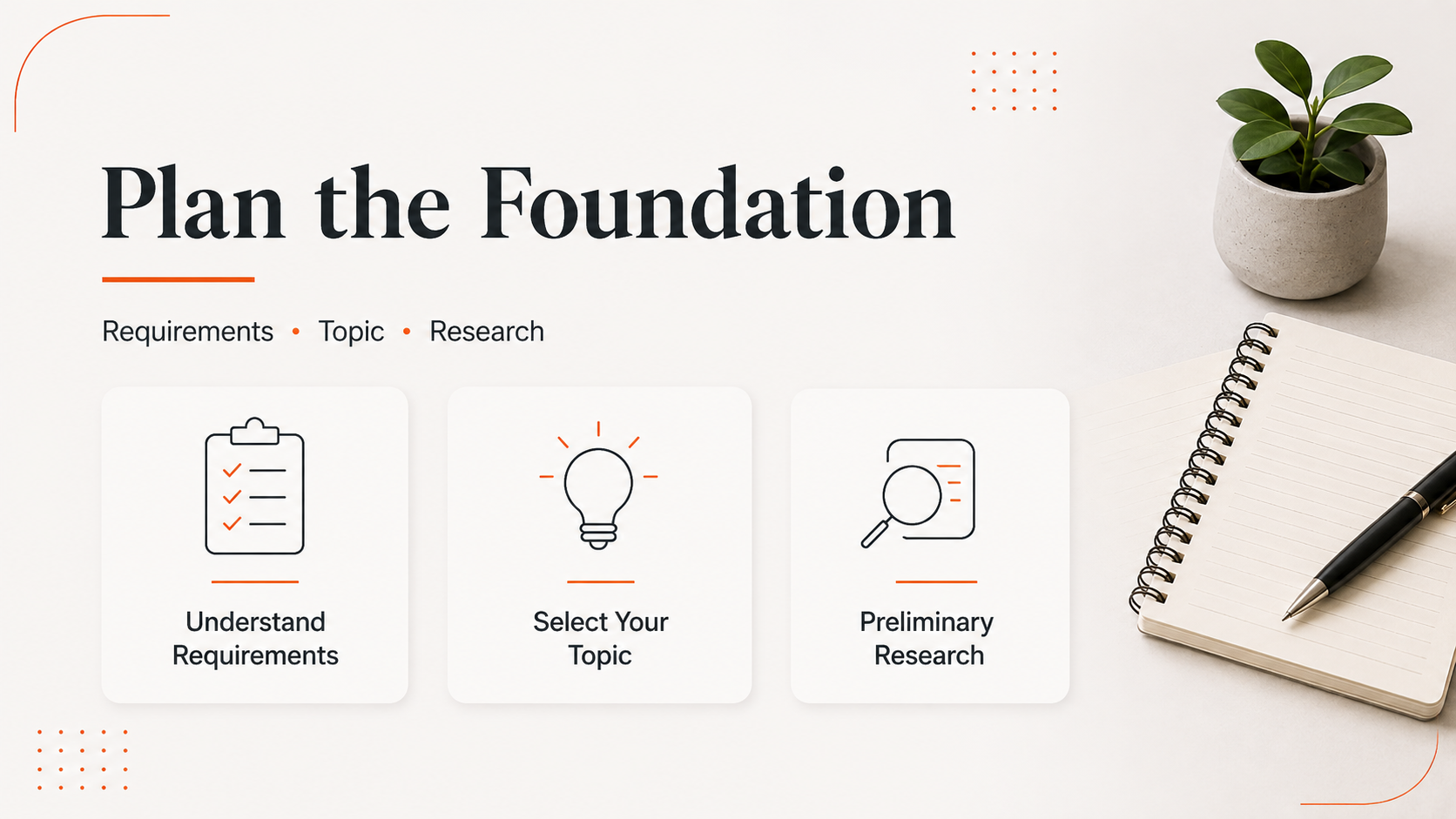
Step 5: Conduct Preliminary Research
Use preliminary research to understand the field and test whether the project is viable. Search scholarly databases, books, conference papers, official reports, and other authoritative sources appropriate to the discipline.
Create a literature matrix containing:
- Citation
- Research question
- Theory or framework
- Method
- Sample or data
- Key findings
- Limitations
- Relevance to your study
The matrix makes it easier to identify themes, debates, and research gaps.
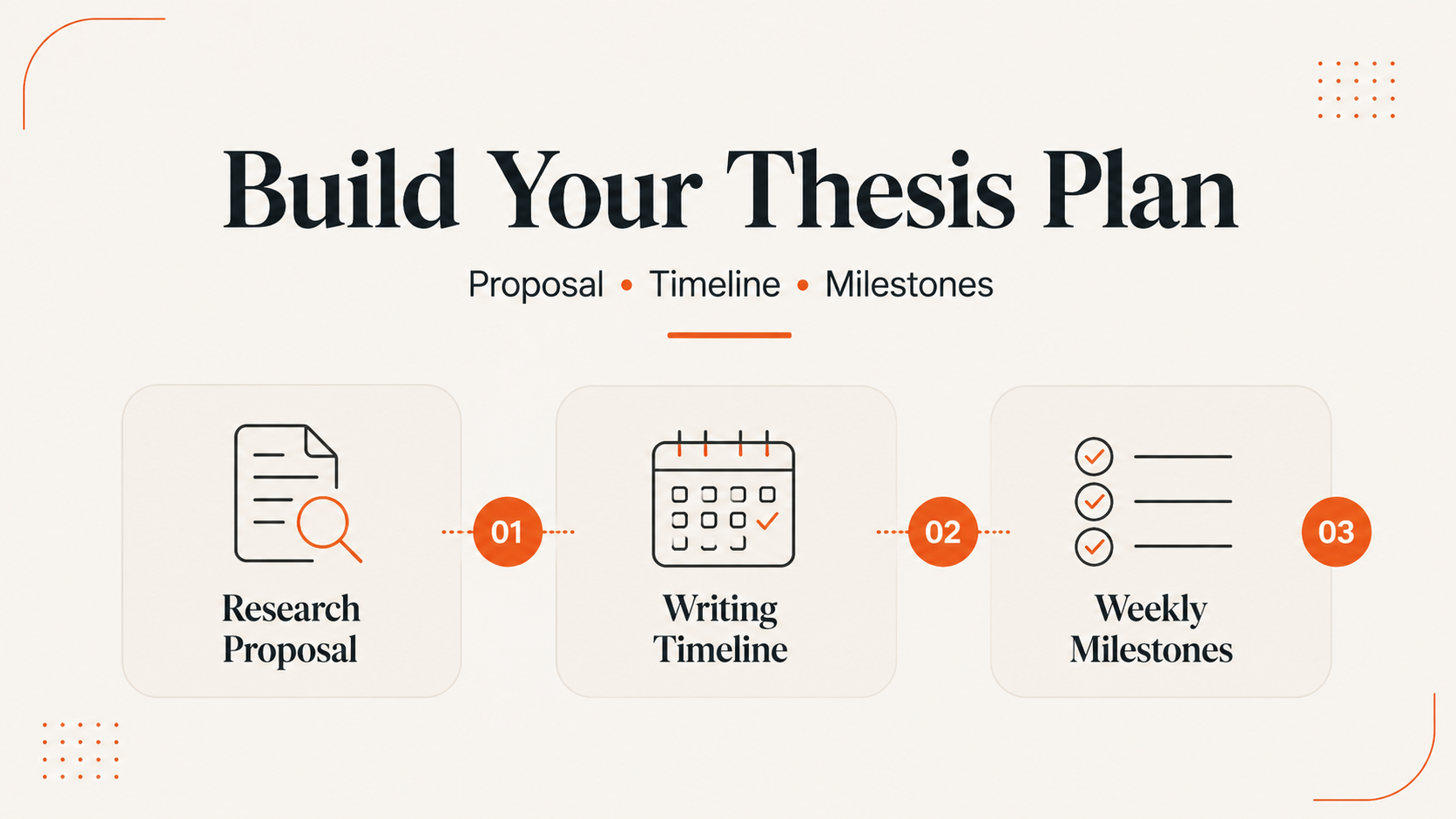
Step 6: Prepare the Research Proposal
A proposal commonly explains:
- Background and context
- Research problem
- Research question and objectives
- Preliminary literature
- Proposed methodology
- Ethical considerations
- Timeline
- Expected contribution
- References
Treat the proposal as a working plan. Update it when approved changes occur, but document why the research design changed.
Step 7: Choose the Methodology
Select methods because they answer the research question—not because they appear impressive or are familiar.
Explain:
- Research design
- Data source or participants
- Sampling strategy
- Collection procedure
- Instruments or materials
- Analysis method
- Reliability, validity, or trustworthiness
- Ethics
- Limitations
Obtain required ethical approval before collecting relevant data.
Step 8: Create a Realistic Timeline
Work backward from the submission date and include time for feedback and unexpected delays.
Example Milestones
- Requirements and topic approval
- Preliminary literature review
- Proposal approval
- Ethics approval, if required
- Data collection
- Data cleaning and analysis
- Chapter drafts
- Supervisor feedback
- Structural revision
- Formatting and proofreading
- Final submission check
Break each milestone into weekly deliverables. "Work on thesis" is too vague; "draft the sampling subsection" is measurable.
Step 9: Organize Files and References
Use a consistent folder and file-naming system from the beginning.
Thesis Project
├── Guidelines
├── Literature
├── Proposal
├── Ethics
├── Data
├── Analysis
├── Figures and Tables
├── Drafts
└── Submission
Keep versioned drafts and more than one secure backup. Store citation information when each source is collected.
Step 10: Collect and Analyze the Evidence
Follow the approved procedure consistently. Keep a research log documenting important decisions, changes, exclusions, and unexpected events.
Before analysis:
- Check data completeness.
- Correct or document errors.
- Apply file and variable labels consistently.
- Protect confidential information.
- Confirm the analytical method still matches the research question.
Present findings honestly, including results that do not support your expectations.
Step 11: Draft Chapter by Chapter
Do not wait for perfect understanding before writing. Drafting exposes gaps in reasoning and evidence.
A useful order may be:
- Methodology
- Results or Findings
- Literature Review
- Discussion
- Introduction
- Conclusion
- Abstract
This is not mandatory, but many students find it easier to finalize the introduction and abstract after the study's actual contribution is clear.

Step 12: Write the Discussion Carefully
The discussion should interpret findings rather than merely repeat them.
For each major finding:
- State the finding briefly.
- Explain what it means.
- Compare it with previous research.
- Discuss possible reasons.
- Explain its significance.
- Acknowledge relevant limitations.
Avoid claims that exceed the data or research design.
Step 13: Revise for Argument and Coherence
Ask:
- Does the thesis answer the research question?
- Does every chapter contribute to that answer?
- Are the methods described clearly enough to understand the study?
- Are interpretations supported by findings?
- Does the conclusion follow from the analysis?
- Are limitations stated honestly?
Move, combine, rewrite, or delete material when necessary. Revision is not merely correcting grammar.
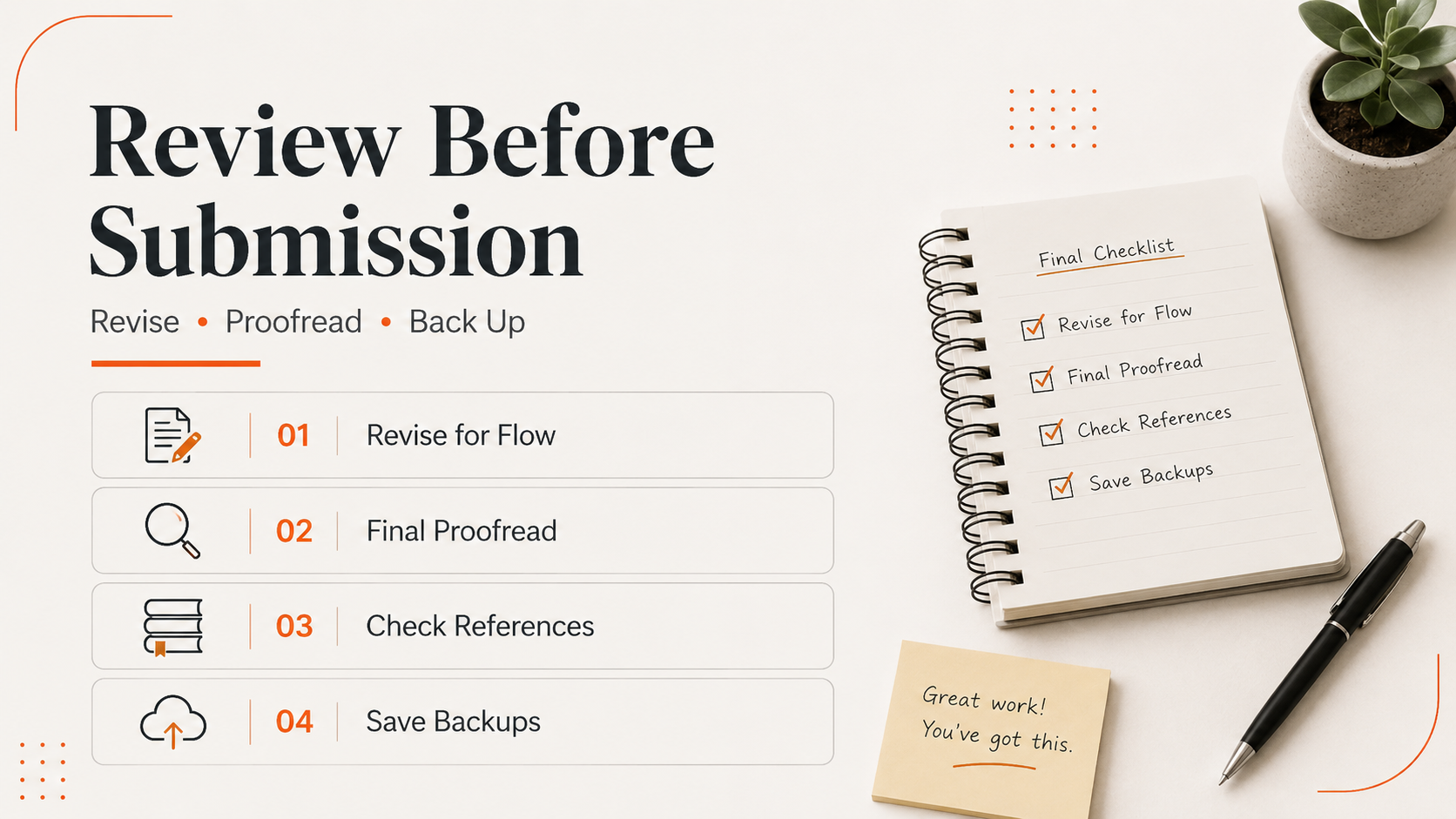
Step 14: Format and Proofread
Complete a separate formatting review for:
- Headings
- Margins and spacing
- Page numbering
- Title page
- Table of Contents
- Lists of tables and figures
- Captions and labels
- Cross-references
- Citations and references
- Appendices
- File naming and format
Then proofread slowly, using more than one method when possible: on screen, on paper, read aloud, or with text-to-speech support.
Step 15: Complete the Final Submission Check
Before submitting:
- Confirm all required files are included.
- Open the final PDF and inspect every page.
- Test internal links and bookmarks if required.
- Check that fonts, equations, tables, and figures display correctly.
- Remove comments, tracked changes, and temporary notes.
- Verify declarations and required forms.
- Keep a secure copy of the submitted version and confirmation receipt.
Productivity Tips That Make a Difference
- Write for a scheduled period each day.
- Define one measurable goal per session.
- Keep a "next action" note so restarting is easy.
- Separate drafting, revising, and proofreading.
- Back up work automatically and manually.
- Meet your supervisor regularly.
- Record feedback and decisions.
- Protect time for rest; exhausted work often creates more revision later.
Conclusion
A successful thesis is built through a sequence of manageable steps: understand the requirements, define a focused question, review the evidence, choose an appropriate method, work to a realistic schedule, and revise with care. The process will not always be linear, but a clear plan makes it easier to recognize problems early and keep the project moving toward a defensible final submission.
Key Takeaways
- Treat the thesis as a sequence of manageable steps, not one overwhelming task.
- Write a short research problem statement and one central research question before choosing a methodology.
- Test topic ideas against relevance, evidence, feasibility, and focus before committing.
- Break your timeline into measurable weekly milestones instead of vague daily goals.
- Many students find it easier to draft methodology and results before finalizing the introduction and abstract.
- Keep a versioned backup system and a research log throughout the project.
- Build a realistic timeline that includes time for supervisor feedback and revision.
Frequently Asked Questions
Written by The Mythesisbuddy Team
Our academics write and review every article — see Our Team for how we protect their privacy and yours.
Related articles

Common Thesis Writing Mistakes Students Should Avoid
Most thesis problems come from unclear scope, weak planning, and rushed revision — not a lack of ability. Fifteen common mistakes to recognize early, and how to avoid each one.
The Mythesisbuddy Team · August 5, 2026 · 6 min read

10 Professional Tips to Write a Thesis Like an Expert
Strong theses aren't produced through inspiration alone — they're built through planning, consistent work, and repeated revision. Ten practical habits for approaching your thesis with more structure and confidence.
The Mythesisbuddy Team · August 15, 2026 · 7 min read
Working on your thesis?
Explore our thesis writing service to learn about the process, pricing, and available support — or message us directly with your requirements.