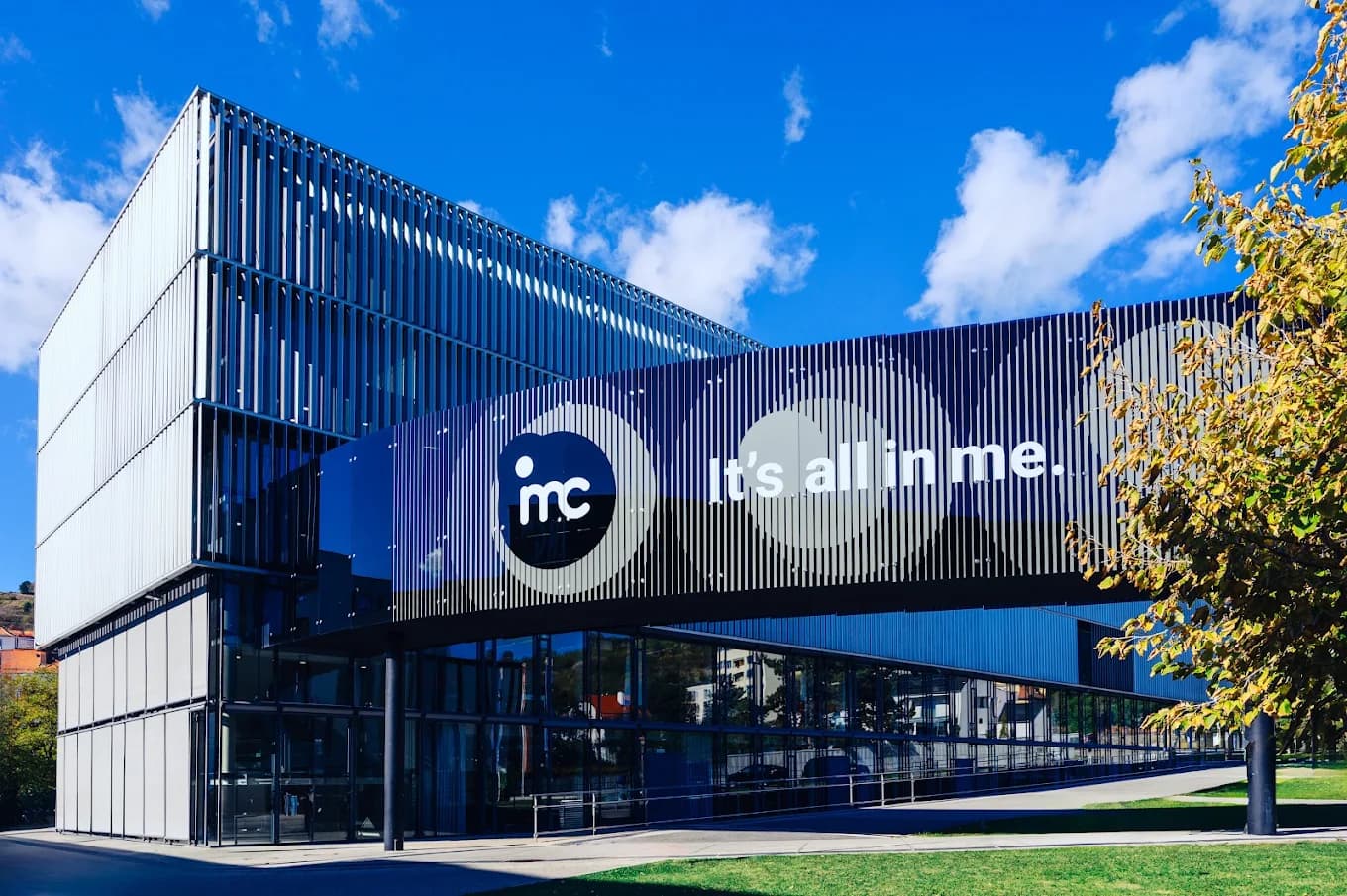
MCI Management Center Innsbruck operates FH bachelor and master programmes under the Fachhochschulgesetz (FHG), so the rules that govern your thesis are not the ones that apply at Innsbruck's public university next door. MCI publishes its Study and Examination Regulations openly, in English as well as German, which is more than many Austrian institutions do.
This guide is shorter than it would be for an institution that publishes a formatting manual, because MCI does not publish one. What follows is what the regulations actually say, followed by a plain list of what they do not cover.
What governs your thesis
MCI's regulations rest on the FHG and are supplemented by resolutions of the MCI Academic Council (Kollegium). The version reviewed here is the updated version of March 2026.
Two federal provisions sit behind them. FHG § 19 allows several students to work jointly on a topic where each contribution can be assessed individually, and requires a positively assessed master thesis to be published through the library, with a right to apply for exclusion of use for up to five years. FHG § 16 sets the structure of the concluding board examination.
Above those, MCI adds its own detail, and below them sit your programme's requirements, which are the layer this guide cannot see.
Writing the thesis
| Rule | What the regulations say |
|---|---|
| Submission dates | At least three per academic year, per study programme |
| Time allowed | Corresponds to the ECTS workload in your curriculum |
| Scope and difficulty | Must correspond to the time available |
| Joint topics | Permitted where each student's performance can be assessed individually, at the Study Programme Directors' sole discretion |
| Changing topic | Possible after work has begun, subject to approval by the Study Programme Directors |
| Assessment criteria | A list of criteria is given to you in writing at the start of the thesis period |
| Declaration | Signed by hand or with a qualified electronic signature such as ID Austria |
Two of those deserve emphasis.
The criteria catalogue is issued in writing at the start of the period, not at the end. It is the closest thing you will get to a specification of what a good MCI thesis looks like. Ask for it on day one and keep it open while you write.
The signature requirement is unusually specific. The declaration in lieu of an oath, affirming that you prepared the thesis independently and without inadmissible aids, must be validly signed by hand or with a qualified electronic signature. A typed name or a pasted image will not do.
The rule that scope must correspond to the time available is the only thing MCI publishes that touches length. It is not a word count. If you want a figure, your Study Programme Directors are the only source for it.
If the thesis fails
MCI is more precise about this than most institutions, and the timings are worth knowing before you need them.
A thesis that does not receive a positive assessment is returned for revision. You get a grace period of not less than one month and not more than four months from the date the negative assessment is communicated. The thesis can be resubmitted twice, in each case at the next submission date scheduled by the Study Programme Directors. A different grace period can be approved in individual cases for good reason.
Because resubmission is tied to scheduled dates rather than to a date you choose, a failure can cost you more calendar time than the grace period suggests. Three dates a year means the next one may be up to four months away.
Academic integrity
The regulations enumerate the forms of plagiarism explicitly, which makes the boundaries easier to work with than a one-line prohibition:
- Full plagiarism, including ghostwriting
- Citation without reference, using parts of another's work without indicating the source
- Idea plagiarism, paraphrasing or adopting an idea with changed wording and syntax but no source
- Translation plagiarism, translating a work or part of one without indicating the source
- Self-plagiarism, submitting the same paper for several courses or reusing your own earlier text without a reference
- Team plagiarism, hidden double or multiple submission of identical work
The consequences run further than the piece of work. A paper regarded as plagiarism is graded Not sufficient, and so is the overall course performance, and because it breaches the Learning Agreement you also receive a written warning. MCI reserves the right to exclude a student from the programme and terminate the contractual relationship. Where a deliberate, wilful or grossly negligent breach of good academic practice comes to light only after the degree has been awarded, the degree is withdrawn.
Generative AI
MCI's position is permissive by default and conditional in practice:
- Use of generative AI systems by students is permitted.
- Study Programme Directors may prohibit it for particular examinations or theses, and any prohibition must be communicated in good time before the examination or before work on the thesis starts.
- If you use it, you are obliged to disclose that use.
- The scope and modalities of disclosure are defined by the Study Programme Directors, not by the regulations.
- Unauthorised use may result in a grade of Not sufficient depending on the extent and type of the violation, and serious breaches can lead to exclusion.
Point four is the practical one. The published rules tell you that you must disclose and not how. Ask your Study Programme Directors for the disclosure format before you start, and keep a running log of which tools you used and where, because reconstructing that afterwards is both painful and unreliable.
The final examination
Admission requires that all courses in the curriculum have been completed with a positive assessment.
Bachelor programmes. A final examination before an examination committee with the relevant expertise, in two parts: discussion of the bachelor thesis submitted, and discussion of the links between the thesis and relevant items in the curriculum. Both parts must be assessed positively.
Master programmes. A comprehensive examination comprising preparation of the master thesis and an examination before a committee. The committee examination has three parts: presentation of the master thesis, discussion of the links between the thesis subject and relevant items of the curriculum, and discussion of other content of relevance to the curriculum. All three must be positive.
That third part is the one to plan for. It is not limited to your own research, so revise the curriculum, not only the thesis.
The committee has at least three people, appointed with regard to the principle of diversity. Where the number of members is even, the chair has a casting vote. All members must be present for the entire examination, and where necessary that can be satisfied through electronic media. Whether you may take part online is at the Study Programme Directors' sole discretion.
Oral examinations are open to the public, except during your preparation time and the committee's deliberation. Where the thesis is subject to a confidentiality clause, the confidential part of the examination is not open to the public. Minutes are kept, recording the questions asked, the grade, and the reasons for any negative assessment.
| Result | Threshold |
|---|---|
| Passed with distinction | 90 percent or more |
| Passed with merit | 80 percent to under 90 percent |
| Passed | 60 percent or more |
| Failed | Less than 60 percent |
Note that this is a different instrument from the one-to-five scale used for coursework, where 90 percent and above is Excellent (1), 80 to under 90 is Good (2), 70 to under 80 is Satisfactory (3), 60 to under 70 is Sufficient (4) and below 60 is Not sufficient (5).
A failed final comprehensive examination may be retaken twice. Examinations before a committee are always held as comprehensive examinations and cannot be retaken as partial examinations. Under § 18(4) FHG you are also entitled to repeat a year once after a negative assessment in a committee examination, and you must notify the Study Programme Directors in writing within one month of the results being announced.
If you receive a negative assessment in a final committee examination and lodge no appeal, and the repeat-year provisions do not apply, you are excluded from the programme and removed from the register of students once the result takes effect. Do not let that two-week window pass by default.
Inspecting your assessment and appealing
You may inspect the assessment documents by prior appointment if you request it within six months of the results being announced, and you may photograph or photocopy them at your own expense, except for closed questions such as multiple choice. After a negative assessment, access must be granted within the two-week appeal window. Assessment documents are kept for six months.
There is no right of appeal against an assessment as such. What you can appeal, in writing and within two weeks of the result appearing on myMCI, is a negatively assessed examination that was conducted in an inadequate manner. The appeal goes to the Study Programme Directors, or to the Chairperson of the Academic Council where the Study Programme Directors held the examination. Appeals against decisions of the Study Programme Directors go to the Academic Council within two weeks.
An appeal has suspensive effect: you may continue attending courses and sitting examinations until it is decided. If it is upheld, the examination is annulled and does not count towards your maximum number of attempts.
Publication and confidentiality
A positively assessed master thesis is published by lodging a digital copy with the library of the provider of the FH study programmes. On lodging it, you may apply for access to be withheld for a maximum of five years from delivery, and the application must be approved where you establish that significant legal or business interests are at risk.
If the thesis is commercially sensitive, deal with the confidentiality clause before the examination, not after, because it also determines whether the relevant part of your oral examination is held in public.
The MCI Library offers counselling, training and courses on research, citation, formatting, publishing and reference management software, and MCI students have access to the University Library of Innsbruck. If your programme's formatting expectations are unclear, the library is a sensible second stop after your Study Programme Directors.
Pre-submission checklist
- I have my programme's criteria catalogue, issued in writing at the start of the thesis period.
- I have asked my Study Programme Directors for the formatting and citation requirements, since none are published.
- Any change of topic since starting was approved by the Study Programme Directors.
- Where several of us worked on one topic, individual contributions are separately assessable and the arrangement was approved.
- Declaration in lieu of an oath signed by hand or with a qualified electronic signature.
- Generative AI use disclosed in the form my Study Programme Directors require, and no prohibited tool was used.
- Nothing reused from my own earlier work without a reference.
- Submission aligned with one of the scheduled submission dates for my programme.
- Confidentiality clause settled with any company partner, including its effect on the public examination.
- Revision for the committee examination covers other curriculum content, not just the thesis.
What MCI does not publish
This is the honest core of the guide. MCI's public regulations contain no rule at all on:
- Length, whether in words or pages
- Font, font size, line spacing, margins or paper size
- Title page contents or layout
- Whether an abstract is required, and in which language
- Citation style
- Any thesis template
- Whether an exposé or proposal is required, and what it must contain
- How supervisors are allocated, and what supervision you are entitled to
- The name of any plagiarism-detection software
- The form in which generative AI use must be disclosed
- Where theses can be found after publication, and how the five-year withholding is applied for
- Whether printed or bound copies are required, and how many
- Whether and how bachelor theses are published
Every one of these sits with your Study Programme Directors. Send them as one list at the start of the thesis period rather than discovering them one at a time. For an FH programme with an industry partner, add a question about what the partner may and may not see before publication.
If you would rather work on the argument than on chasing specifications, our thesis writing support is built for that stage, but the specifications still have to come from MCI.
The short version
MCI's published rules are about process, and they are good ones: three submission dates a year, a criteria catalogue up front, a clear revision window of one to four months, a two-week appeal right with suspensive effect, and a committee examination whose parts are spelled out.
Nothing in the public record tells you what the document should look like. Get the criteria catalogue and the formatting requirements from your Study Programme Directors in week one, sign the declaration properly, and settle the AI disclosure format before you use a single tool.