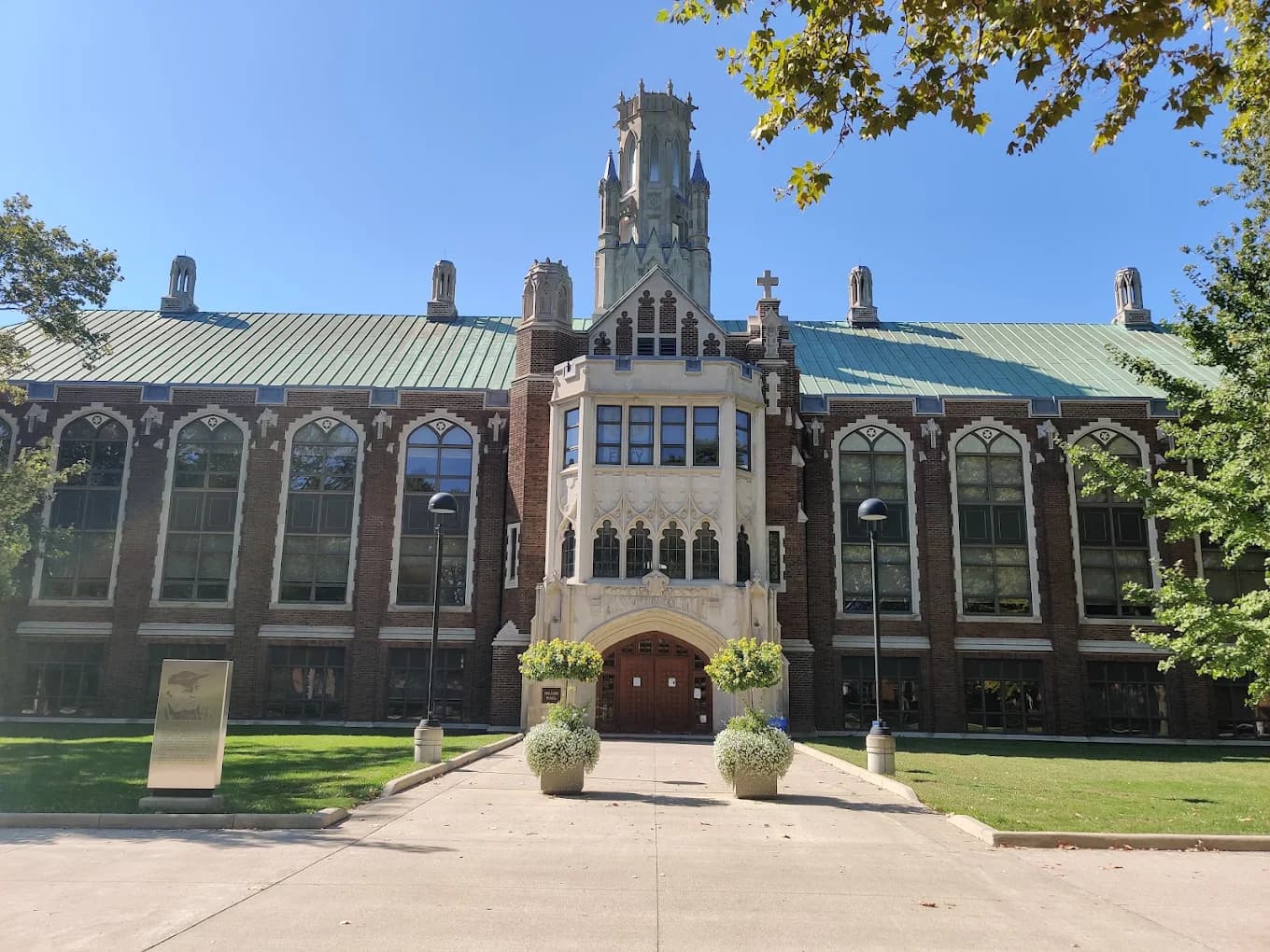
Seneca Polytechnic in Toronto is a polytechnic rather than a research university, but its credential range is wider than most Ontario colleges. That changes what "research writing" means depending on where you sit in it.
Seneca's programs by credential page lists advanced diplomas, bachelor degrees, certificates, diplomas, graduate certificates, honours bachelor degrees, master's degrees and microcredentials. The master's entry is new and is the reason this guide looks different from a guide to a college with no graduate programming.
What you are actually writing
| Credential | Culminating written work |
|---|---|
| Certificate, Diploma, Advanced Diploma | Applied projects and placement reports; no thesis |
| Graduate Certificate | Applied project or work term report |
| Bachelor / Honours Bachelor Degree | Capstone project, usually in the final semester |
| Master of Artificial Intelligence Design & Development | A two-semester Applied Research Project |
At degree level, the degree list runs to four bachelor's degrees and around twenty honours bachelor's degrees. The pattern is a capstone rather than a thesis. The Bachelor of Business Administration is a clear published example: six semesters over three years, a work-integrated learning term (BBA881) in Semester 4, and BBA600 Strategic Business Solutions as the Semester 6 capstone, described as a capstone project on a real-world problem with an industry partner.
Some honours degrees do describe a thesis component. The requirement genuinely differs between programs, so read your own program's course list. Do not take a friend's capstone brief as a model for yours.
Seneca does not publish an institution-wide capstone or thesis specification. There is no central page giving a word count, margin, chapter order or submission format. Your course outline, rubric and supervisor are the specification. Ask for all three in week one.
The master's route: two semesters of Applied Research Project
The Master of Artificial Intelligence Design & Development is Seneca's first master's degree. Its published course list runs over four semesters, roughly 16 months:
| Semester | Research-relevant courses |
|---|---|
| 1 | MAI101 Machine Learning, MAI102 Mathematics for Machine Learning Algorithms, MAI103 Data Science for AI, MAI104 AI Project Management, MAI105 Ethics in AI |
| 2 | MAI205 Artificial Intelligence Research (alongside ML Ops, Deep Learning, NLP, Computer Vision) |
| 3 | MAI300 Applied Research Project, MAI333 Internship 1 |
| 4 | MAI400 Applied Research Project II, MAI444 Internship II |
Three things follow from that structure.
First, there is no traditional master's thesis here. The culminating work is an Applied Research Project developed from an ARP project plan, carried out independently with academic supervision, and concluding in presentations and a report or portfolio. If you write it as a conventional five-chapter thesis you will be answering a question nobody asked.
Second, the research course sits in Semester 2 and the project starts in Semester 3. Your proposal work and, if human participants are involved, your ethics application belong to Semester 2. That is the single most useful piece of scheduling in this guide.
Third, the project runs concurrently with internship placements in both project semesters. Plan for a divided week, not a clear one.
If you are shaping a two-semester applied research project from a project plan into a defensible report, our thesis and major project support works to that structure rather than to a generic thesis outline.
Research ethics: the hardest deadline at Seneca
Seneca's Research Ethics Board reviews the ethical acceptability of all research involving human participants conducted under the auspices of or on the premises of Seneca Polytechnic, applying the federal Tri-Council Policy Statement: Ethical Conduct for Research Involving Humans (TCPS 2). That includes course-based student research, and clearance must be in place before recruitment or data collection begins.
There are two review routes:
- Minimal risk. Reviewed on a rolling basis by one or two REB members, with decisions typically issued within about 10 business days.
- Greater than minimal risk. Full board review at a monthly meeting, with applications due two weeks before the meeting.
The published fall 2026 schedule:
| Meeting | Application deadline |
|---|---|
| 10 September 2026 | 27 August 2026 |
| 8 October 2026 | 24 September 2026 |
| 12 November 2026 | 29 October 2026 |
| 10 December 2026 | 26 November 2026 |
The board does not meet in July or August, and full reviews submitted after mid-April may not be reviewed until September. If your project runs over a spring or summer term, that gap is the thing most likely to derail it.
What the submission package needs:
- The current REB application form
- A TCPS2-CORE-2022 certificate. Since 1 May 2024, earlier versions of the certificate are not accepted, so a CORE certificate you earned years ago will not do.
- Recruitment materials
- Information letter and consent form
- Study materials such as questionnaires and interview guides
Every document must follow the naming protocol LastName DocumentType YYYY-MM-DD. That is a small thing that gets packages returned.
One more requirement that catches students by surprise: ethics approval is not the same as administrative approval. Research involving Seneca staff, students or institutional data needs separate administrative clearance from the Vice-President Academic's office, which takes 10 to 30 days. If you plan to survey your classmates, you need both, and they run on different clocks.
General inquiries go to [email protected], and the REB publishes virtual office hours on Tuesday afternoons. Use them during your proposal semester.
Academic integrity and the AI disclosure rule
Seneca's Academic Integrity Policy, approved in July 2018 and last revised in May 2024, defines the violations you need to know:
- Plagiarism: using another individual's, group's or organization's work as one's own without properly citing the source. This explicitly includes self-plagiarism, the unauthorized re-use of your own work from previous assignments.
- Cheating: obtaining or attempting to get credit for work by dishonest or deceptive means, including unauthorized collaboration and undeclared AI use.
- Contract cheating: submitting work created by a third party as your own for academic credit.
The policy's definition of undeclared AI use is worth quoting to yourself before every submission: using artificial intelligence without a disclosure statement outlining how and to what extent the artificial technology was used. Note what that means in practice. Permission alone is not enough. A disclosure statement is a separate, required artifact.
Sanctions escalate through verbal and written warnings, academic integrity assignments, grade reductions, course failure, suspension of three to nine terms minimum, and permanent expulsion for repeat offences after a suspension. The process runs from information gathering to a formal report, an Academic Integrity Committee meeting and a written decision, with a student appeal window of five business days.
The separate GenAI policy
Unusually for an Ontario college, Seneca maintains a standalone Generative Artificial Intelligence Policy, approved in March 2024. It applies to students, employees and contracted third parties, and it covers personal devices used for Seneca work or study, not just institutional ones.
What it requires of you:
- Make GenAI usage visible to the reader, viewer or listener, through labels, footnotes or similar means, whenever the content supports academic or work purposes.
- Reference GenAI-generated content used academically.
- Keep records of your GenAI usage for academic work. This is the obligation students most often miss. Start a log the day you start using a tool, not the day someone asks about it.
- Review every output yourself, including for alignment with Seneca's stated commitments on reconciliation, equity, diversity, inclusion and sustainability.
What it prohibits:
- Inputting personal information or institutional intellectual property into unapproved applications
- Using your Seneca credentials to sign into public GenAI platforms
- Using outputs that discriminate on grounds protected under Ontario law
On top of all that, Seneca Libraries' AI and academic integrity guidance is blunt about the first step: before using generative AI for any schoolwork you must have permission from your instructor. Instructors set the rules per class, including which tool, how, when, and how you declare it.
Citation
Seneca Libraries publishes citation guides for the two styles it names as common at Seneca: APA, based on the 7th edition of the Publication Manual, and MLA, based on the 9th edition of the MLA Handbook. Each carries citation examples, citation basics, quoting and paraphrasing guidance and FAQs, and the library runs live citation workshops.
Seneca does not mandate a single institution-wide style. Technology and engineering programs commonly work in IEEE, which the library's main citation pages do not foreground. Take the style from your course outline.
For the literature reviews and research papers that lead into a capstone or an Applied Research Project, our research paper help works to whichever style your outline names.
Pre-submission checklist
- I have confirmed what my program actually requires: capstone, thesis, Applied Research Project or applied report.
- Course outline, rubric and supervisor expectations obtained before drafting.
- Human participants involved? REB application submitted, and approved before any recruitment or data collection.
- TCPS2-CORE-2022 certificate completed (not an earlier CORE version) and included.
- Full-board application submitted at least two weeks before a published meeting date.
- All ethics documents named as
LastName DocumentType YYYY-MM-DD. - Separate administrative approval sought from the VP Academic's office if my study involves Seneca staff, students or institutional data (allow 10 to 30 days).
- Instructor permission for any generative AI use obtained before I used it.
- A disclosure statement included, saying how and to what extent AI was used.
- A record of my GenAI usage kept for this piece of academic work.
- No personal information, institutional IP or Seneca credentials given to an unapproved AI platform.
- No re-use of my own previous assignment work without permission.
- One citation style, one edition, applied consistently, taken from the course outline.
- Industry partner confidentiality and IP terms checked before any public presentation.
What this guide could not confirm
- No published institution-wide capstone, thesis or Applied Research Project specification: no word count, page format, margin, structure or submission portal.
- No published mandated citation style across Seneca.
- No published defence or presentation format for capstones or the master's Applied Research Project beyond the course descriptions.
- No published open template for student research agreements with industry or community partners.
- No published institutional repository for completed capstones or Applied Research Projects.
- No published REB turnaround time for full-board review, only the 10 business day guide for minimal-risk applications.
Each of these is a question for your program coordinator, your supervisor, or [email protected].
The short version
Work out first whether you are writing a capstone, a thesis or a two-semester Applied Research Project. They are not the same document and they are not graded on the same things.
If human participants are involved, put the REB deadline in your calendar before you put anything in your outline, and check whether you also need administrative approval. Get AI permission in writing, write the disclosure statement, and keep the usage log. Then take your length, structure and citation style from your course outline, because Seneca does not publish those centrally.