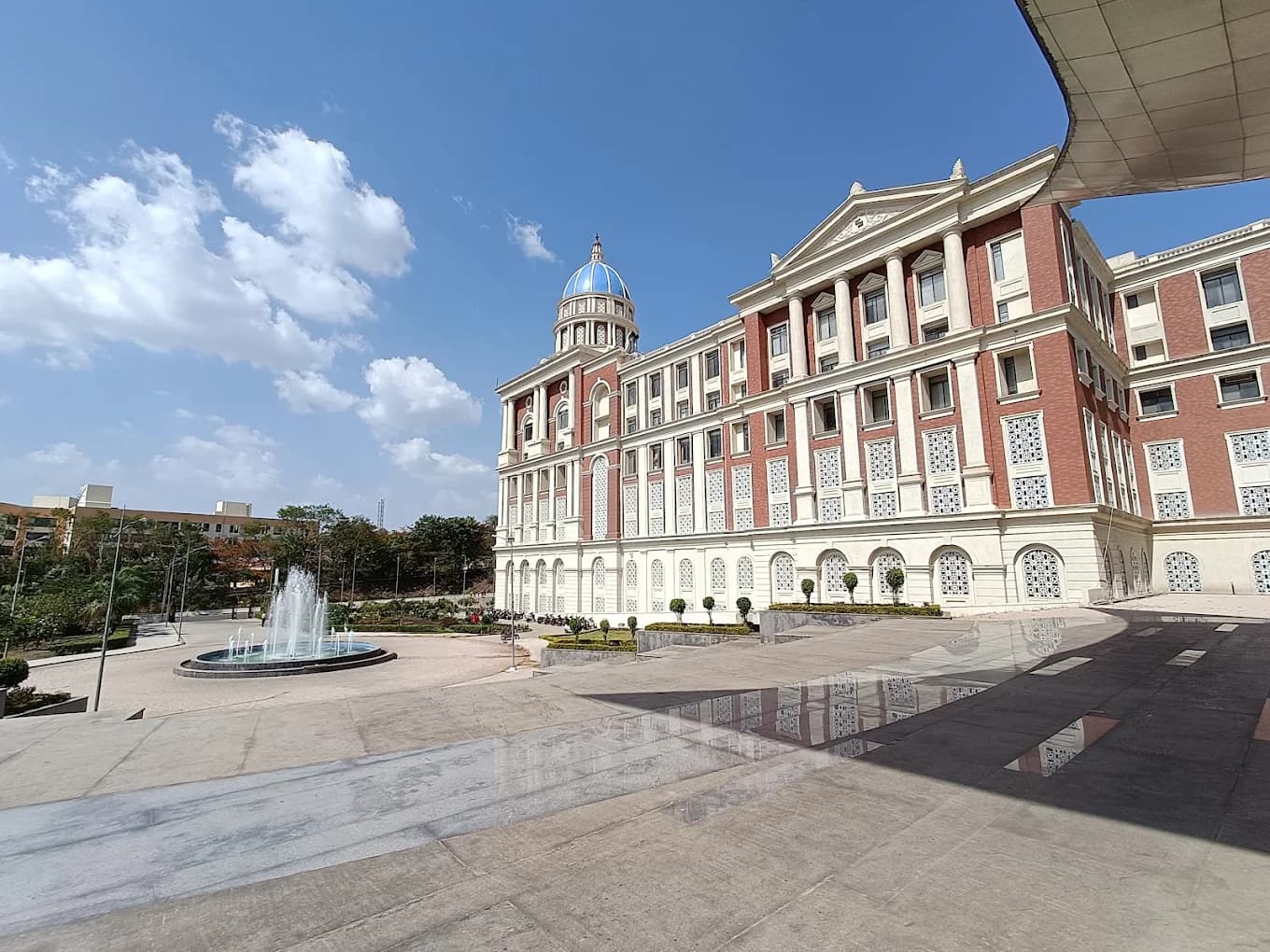
Lovely Professional University is a large private university in Punjab. Its PhD sits inside the UGC 2022 national framework, which our Manipal guide sets out in full, but LPU tightens several of those provisions.
Where LPU is stricter than UGC
| Provision | UGC minimum | LPU |
|---|---|---|
| Minimum duration | 2 years, excluding coursework | 3 years from registration |
| Maximum duration | 6 years | 6 years |
| Coursework credits | 12 to 16 | 14, across four courses |
The three year minimum applies to both full-time and part-time candidates. If you have read the UGC figure and planned a two year finish, that plan does not work here.
Candidacy is a gate, not a formality
This is the structural feature to understand early. At LPU you are admitted as a research scholar, but you are not yet a PhD candidate. Candidacy is granted on two conditions:
- Passing the coursework
- Successfully defending the State-of-the-Art (SAS) seminar
The SAS seminar
The SAS seminar delineates the current state of knowledge about the specific problem, along with the proposed research methodology.
Two halves, and both are assessed. The first asks whether you actually know your field well enough to identify where the gap is. The second asks whether your method can address it.
This is a more demanding version of what many universities call a proposal defence, because "state of the art" sets the bar at current knowledge rather than at a general literature review. A survey of the classic papers in your area will not satisfy it if the field has moved in the last three years.
Prepare it as a genuine argument: here is what is known, here is precisely what is not, here is how I will find out.
Coursework and the attendance rule
Four courses, 14 credits. And a requirement that trips people:
A minimum of 75% attendance in each course is required to be eligible for the end-term examination.
Per course, not on average. Missing classes in one course while attending diligently in the others does not balance out; it makes you ineligible to sit that course's examination, which blocks the coursework pass, which blocks candidacy.
For part-time scholars with work commitments, this is the practical constraint to plan leave around.
Progress review
Once candidacy is granted:
The scholar will appear before the Research Advisory Committee once in six months to make a presentation of the progress of the work for evaluation and further guidance.
That mirrors the UGC requirement, and the six-monthly rhythm is the same across Indian institutions.
Pre-submission, and the timeline it implies
Thesis pre-submission should ideally be submitted after 2.5 years from the date of admission.
Set against a three year minimum, this tells you the intended shape of the programme: pre-submission at around two and a half years, with roughly six months for evaluation, viva and completion after it.
Working backwards, that means the research needs to be essentially finished at the two year mark, with the final months going to writing rather than data collection. Scholars who are still generating results at 2.5 years are, by the university's own design, behind.
What the thesis is evaluated against
LPU lists four inputs:
- Fulfilment of research objectives
- Research publications
- Conference presentation
- The recommendations of the Research Advisory Committee
Publications and a conference presentation are both part of the evaluation. LPU does not publish a specific count or indexing requirement on its public PhD rules page, unlike some Indian universities which name a number and an index. Ask your supervisor and your RAC what is expected in your discipline, and ask early, since publication timelines are the least controllable part of a doctorate.
The examiners, and the wording that matters
The thesis will be evaluated by at least two external experts.
And the condition on proceeding:
The viva voce will be conducted only if the evaluation reports of the external examiners on the thesis are satisfactory and include a specific recommendation.
Note the second limb. A report that praises the work in general terms but stops short of recommending the award does not satisfy this. Examiners are being asked for a decision, not an impression, and a vague report sends the process back rather than forward.
On the 10% figure
LPU publishes a 10% similarity limit using Turnitin, and it is widely quoted. Read what it actually governs:
10% is the maximum allowed value for similarity index for research publications, using Turnitin, for the purpose of availing grant benefits under the URDI policy. Publications with a similarity index above 10% are not eligible for grant benefits.
So it is a funding eligibility rule for publications, not a stated thesis submission threshold. That distinction matters, and repeating the figure as a thesis limit would be misleading in both directions: it might reassure someone whose thesis faces a different standard, or alarm someone whose situation it does not govern.
What does govern your thesis:
- LPU's zero tolerance plagiarism policy, which describes plagiarism as a serious misconduct subject to strict disciplinary action
- The UGC requirement for an originality report submitted with the thesis, which the supervisor must take into account
- Whatever threshold your department applies in practice, which is the question to put to your supervisor directly
What the similarity check excludes
For the grant-benefit calculation, LPU follows UGC guidelines in excluding:
- Quoted work reproduced with necessary permission or attribution
- References and bibliography
- Table of contents
- Preface and acknowledgements
- Generic terms, laws, standard symbols and standard equations
Those exclusions are worth knowing whatever threshold applies to you, because a raw uncorrected similarity score on a thesis with a long bibliography is meaningless.
Sequence at a glance
| Stage | Timing |
|---|---|
| Registration | Day one |
| Coursework: 4 courses, 14 credits, 75% attendance each | Early |
| State-of-the-Art seminar | Before candidacy |
| Candidacy granted | On passing both |
| RAC presentation | Every 6 months thereafter |
| Pre-submission | Ideally ~2.5 years from admission |
| Evaluation by ≥ 2 external experts | After pre-submission |
| Viva voce | Only on satisfactory reports with a specific recommendation |
| Minimum completion | 3 years |
| Maximum | 6 years |
Pre-submission checklist
- Coursework passed, with at least 75% attendance in every individual course
- State-of-the-Art seminar defended and candidacy granted
- RAC presentations made every six months since candidacy
- Research objectives demonstrably fulfilled
- Publication expectations confirmed with my supervisor and RAC, and met
- Conference presentation completed
- Originality report prepared, with UGC exclusions correctly applied
- Thesis similarity threshold for submission confirmed with my supervisor, not assumed from the grant policy
- Pre-submission at around 2.5 years, not later
- Inside the six year maximum
Where to get help
Your Research Advisory Committee owns progress, publication expectations and the academic direction. The research and development office owns the research policy, ethics and the grant rules. For anything about thresholds that the public pages leave ambiguous, ask your supervisor and get the answer in writing.
If the writing is the bottleneck, our thesis writing support works chapter by chapter, our PhD thesis help covers doctoral work, and our research paper support is relevant if publications are what stand between you and pre-submission.