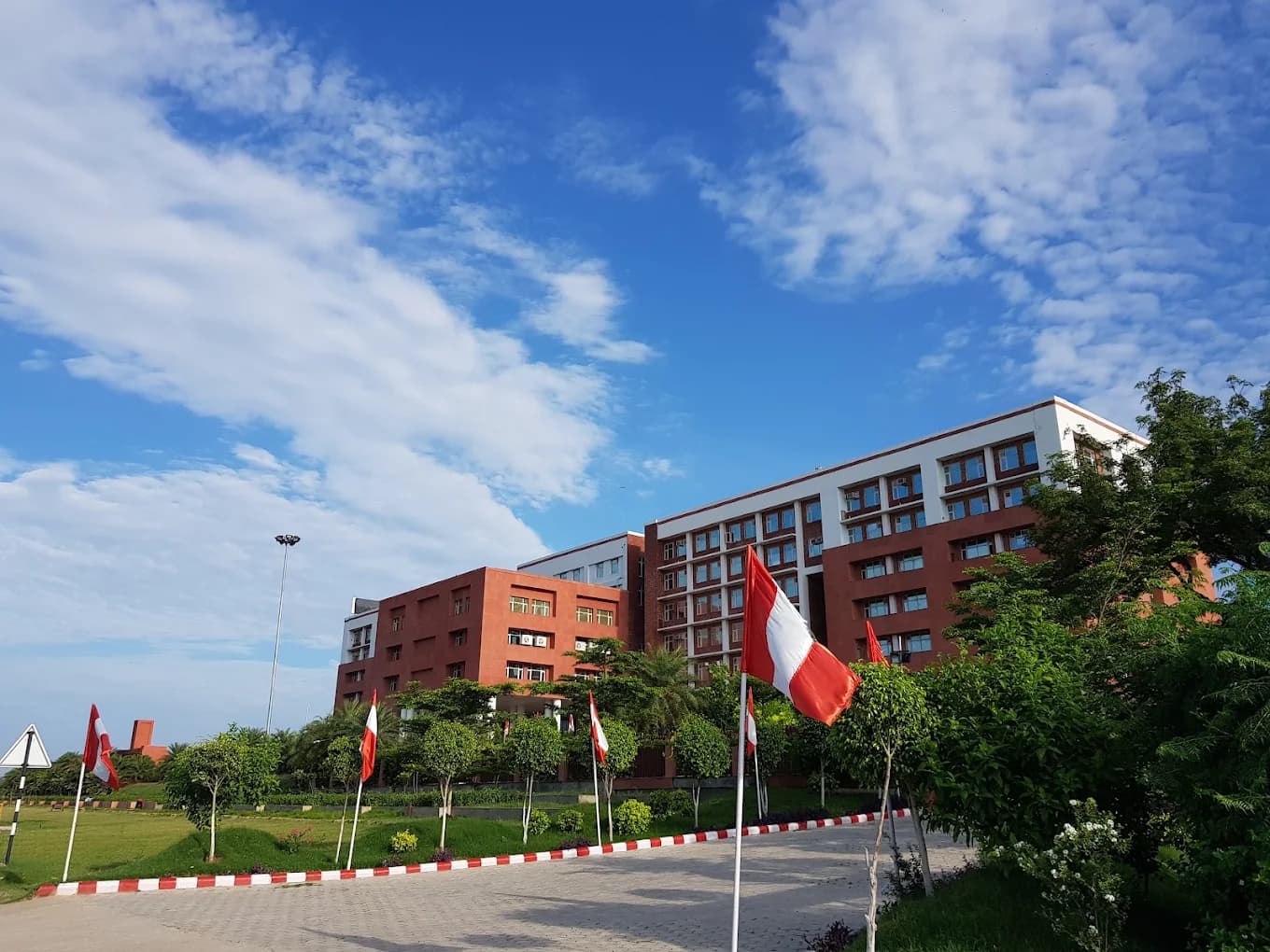
Manipal Academy of Higher Education is a deemed university with campuses at Manipal, Mangalore, Bangalore, Jamshedpur and Dubai. Its PhD is governed by the MAHE Ph.D. Guidelines, sitting inside the national framework set by the University Grants Commission.
Because this is the first of our Indian guides, it is worth setting out that national framework once. Every Indian PhD sits inside it, and several figures people worry about are actually UGC's rather than their university's.
The national framework, briefly
The UGC (Minimum Standards and Procedure for Award of Ph.D. Degree) Regulations, 2022 were notified in the Gazette on 7 November 2022, replacing the 2016 regulations and reflecting the National Education Policy 2020.
| Provision | Rule |
|---|---|
| Minimum duration | 2 years, excluding coursework |
| Maximum duration | 6 years |
| Extension | Per the institution's own statute, but not beyond a further 2 years |
| Relaxation | 2 additional years for women candidates and Persons with Disabilities (more than 40% disability) |
| Coursework | Minimum 12 credits, maximum 16 |
| Research Methodology | Minimum 4 credits, covering quantitative and qualitative methods, computer applications, research ethics and review of published research |
| Progress review | Present to the Research Advisory Committee once every six months |
| Repository | After evaluation and before the award is announced, the institution deposits an electronic copy with INFLIBNET or its own archive |
Entry is normally a master's degree with at least 55% or grade B on the UGC 10-point scale; a four-year bachelor's with research requires a minimum CGPA of 7.5/10.
On plagiarism, the regulations require the thesis to be submitted with an originality report from anti-plagiarism software, which the supervisor must take into account. The regulations add a caution worth remembering:
An originality report is not to be considered as sufficient proof that the submitted thesis is free of plagiarism.
A low percentage is not a defence. The report is evidence, not absolution.
Your institution's ordinance is what binds you. UGC sets minimums; universities routinely set more demanding rules on top. Manipal is a clear example.
The MAHE rule that changes everything
UGC's 2022 regulations removed the national mandatory publication requirement that the 2016 rules imposed. Manipal did not follow suit.
Two first-author journal publications indexed in SCOPUS or Web of Science (JCR indexed), in the field of the PhD research, are mandatory for submitting the synopsis and the thesis.
Three details inside that sentence matter:
First author. Not a co-authorship, not a middle position. Two papers where you are first author.
Indexed. SCOPUS or Web of Science with a JCR listing. A paper in a journal outside those indexes does not count, however respectable.
Related to the thesis subject. A publication from a side project does not satisfy it.
Articles published during the course of the PhD count toward the requirement.
Why this dominates your timeline
Journal review is the one part of a PhD you do not control. A submission can sit under review for months, come back with major revisions, and go round again. Two papers through that process, both first-author, both indexed, is frequently the binding constraint on when a Manipal PhD finishes, not the research and not the writing.
The practical consequence: start submitting early. A scholar who waits until the thesis is drafted before sending a first paper out has added a year, possibly more, to their own timeline. Plan the publications as milestones from the first year, not as an output of the last.
Coursework
| Entry route | Minimum credits |
|---|---|
| With a master's degree | 12 |
| With a bachelor's degree | 18 |
Mandatory components:
- Research Methodology, minimum 4 credits
- Research and Publication Ethics
Coursework proposed by your Doctoral Advisory Committee (DAC) must be at master's level or higher. Courses specific to your thesis work may take the form of hands-on training or workshop attendance.
The pass standard has two parts:
A minimum grade of C in each course, and an overall CGPA of at least 7.5 out of 10.
The second is the real bar. Cs throughout will not produce a 7.5 CGPA, so treat the per-course minimum as a floor for failure rather than a target.
Progress, every six months
You submit a report to your DAC every six months. After the DAC meeting you must incorporate the changes the committee recommends and submit a hard copy to the Centre for Doctoral Studies (CDS).
Note the second half. The report is not filed and forgotten; the recommendations come back into your work and the revised version is lodged. Committees notice when the same recommendation appears in successive meetings.
The research protocol format
MAHE specifies the protocol tightly:
| Element | Requirement |
|---|---|
| Length | 15 to 20 pages, A4 |
| Margins | 1 inch on all sides |
| Headings | 14 point, bold |
| Sub-headings | 12 point, bold |
| Body text | 12 point, 1.5 line spacing |
| References | Standard format such as Vancouver, Harvard or APA, all cited in the text |
Where the proposal involves animals, human subjects or human materials, Institutional Ethics Committee approval or proof of submission goes in with the application. Work involving transgenic or genetically modified organisms carries its own approvals.
Originality
The similarity check report must show the total word count, a similarity index below 15%, and exclude matches under 3 words. It is signed by both the PhD scholar and the guide.
That configuration matters. Excluding matches under three words removes trivial phrase overlap, which means a 15% index under these settings represents more genuine similarity than 15% under looser settings would. It is a meaningful threshold, not a generous one.
The thesis carries an undertaking from the scholar and a certificate from the guide on originality. Plagiarism is penalised under MAHE norms.
From synopsis to submission: three months
A No Objection Certificate for thesis submission must be obtained from the CDS within 3 months of the synopsis presentation.
Three months is not long. It means the synopsis presentation should come when the thesis is substantially written, not when the research is finished and the writing is about to begin. Scholars who treat the synopsis as a mid-point rather than a near-endpoint routinely run into this.
The public defence
Open, with a clear division of roles:
- Faculty members and others who are not on the board of examiners may ask relevant questions, with the examiners' permission
- The board takes their views and criticism into consideration
- But the result is decided solely by the members of the board of examiners
Examiners must hold a PhD and must not be related to the scholar or the supervisor.
After the defence and viva voce, the examiners submit a joint report and their recommendation to the Registrar.
Afterwards
The full text of the thesis is uploaded to Shodhganga, the national repository run by INFLIBNET. This satisfies the UGC deposit requirement, and it happens before the degree is announced.
Pre-submission checklist
- Two first-author SCOPUS or Web of Science indexed papers published, on the thesis subject
- Coursework complete: 12 or 18 credits, including Research Methodology and Research and Publication Ethics
- Minimum C in every course and overall CGPA of at least 7.5
- Six-monthly DAC reports filed, with recommendations actually incorporated
- Ethics approvals in place for human subjects, animals or GMOs
- Similarity index below 15%, matches under 3 words excluded, report signed by me and my guide
- Originality undertaking and guide's certificate prepared
- Synopsis presented only when the thesis is substantially complete
- NOC obtained from CDS within 3 months of the synopsis
- Within the UGC maximum of 6 years, or a documented extension
- Thesis templates from the annexures used, not improvised
Where to get help
The Centre for Doctoral Studies owns the process, the NOCs and the templates. Your Doctoral Advisory Committee owns the academic direction and the six-monthly review. For anything the MAHE guidelines leave open, the guidelines themselves are the authority rather than general UGC provisions, since MAHE sets requirements above the national minimum.
If the writing is the bottleneck, our thesis writing support works chapter by chapter, our PhD thesis help covers doctoral work, and our research paper support is relevant if the publication requirement is what stands between you and submission.